
Starliner Capsule to Fly Cargo, Not Crew
- NASA and Boeing adjust plans after technical setbacks
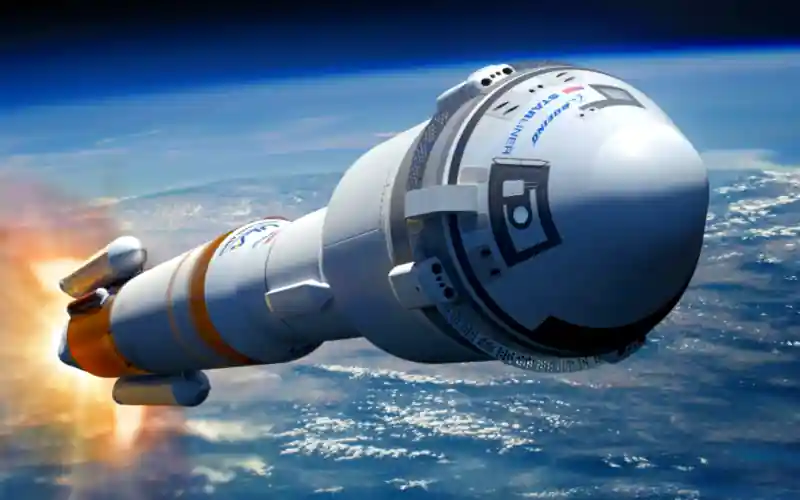
Boeing and NASA have decided that the company’s next Starliner (pictured) mission will carry cargo instead of astronauts. The move follows significant technical issues during the capsule’s first crewed mission, which forced NASA to order its return without passengers. Test pilots Butch Wilmore and Suni Williams had successfully docked Starliner to the International Space Station in 2024, but the capsule’s problems left them stranded for more than nine months. Engineers have since been working to resolve thruster malfunctions and other concerns.
Safety First Approach
The next Starliner flight, scheduled no earlier than April, will undergo further testing and certification before launch. Boeing stated that safety remains its highest priority and reaffirmed its commitment to the program. NASA has reduced the number of planned Starliner flights from six to four, reflecting caution after the capsule’s difficulties. If the cargo mission proves successful, three crewed flights are expected before the station’s planned retirement in 2030.
NASA’s commercial crew program manager Steve Stich said rigorous testing of the propulsion system is underway. He noted that two potential flights could take place next year if safety standards are met. The agency continues to emphasize reliability as a prerequisite for crewed missions. Boeing’s future in human spaceflight hinges on demonstrating Starliner’s readiness.
Program Background
NASA awarded contracts to Boeing and SpaceX in 2014 to transport astronauts following the retirement of the space shuttle. Boeing’s deal was valued at $4.2 billion, while SpaceX received $2.6 billion. SpaceX launched its first astronaut mission in 2020 and has since completed twelve crewed flights for NASA. Boeing, by contrast, has struggled to bring Starliner to operational status.
The disparity between the two companies highlights the challenges of developing new spacecraft. SpaceX has become NASA’s primary partner for crew transport, while Boeing continues to face delays. The cargo-only mission represents another step in Boeing’s effort to prove Starliner’s reliability. Success will be critical for maintaining its role in the commercial crew program.
Looking Ahead
NASA and Boeing remain focused on ensuring Starliner can safely carry astronauts in the future. The capsule’s upcoming cargo mission will serve as a test of its systems under operational conditions. Engineers hope that resolving propulsion issues will pave the way for renewed confidence in the spacecraft. The program’s outcome will influence how NASA balances partnerships between Boeing and SpaceX.
Starliner’s troubled 2024 mission marked the first time NASA astronauts had to rely on SpaceX for their return to Earth. This unusual situation underscored SpaceX’s growing importance in U.S. spaceflight and highlighted the risks of relying on multiple providers with differing levels of readiness.