

AI Guidance Expands Drone Warfare in Ukraine
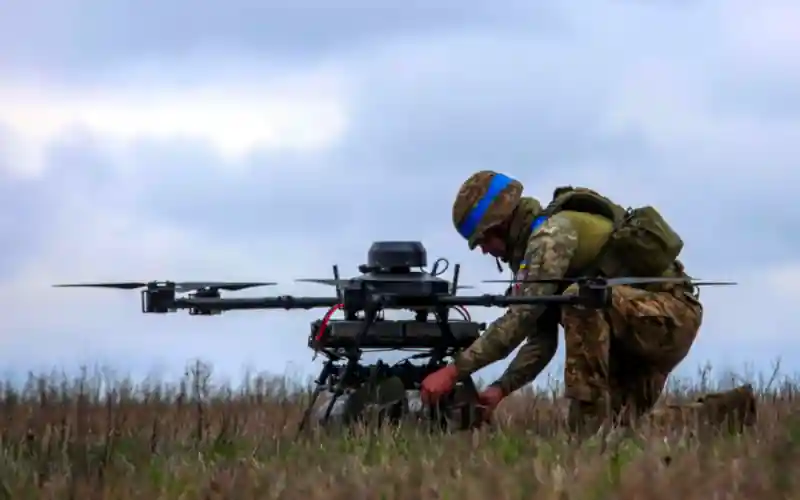
- Human Pilots and AI Systems
Ukrainian drone operators are increasingly relying on artificial intelligence to carry out strikes under difficult battlefield conditions. One pilot, known by the call sign Mex, described a recent mission in which a 20-kilometre attack on what appeared to be a Russian tank succeeded only with AI-assisted targeting. He explained that without the system’s guidance, the strike would not have been possible. The 31-year-old serves in Ukraine’s 58th Separate Rifle Brigade and emphasized that human oversight remains central to decision-making.
Overcoming Signal Jamming
Since the start of Russia’s invasion nearly four years ago, drone technology has advanced rapidly. Both sides now produce millions of drones annually, and electronic warfare has become a defining feature of the conflict. Signal-jamming devices frequently sever the connection between drones and their operators, causing many aircraft to crash before reaching their objectives. To counter this, drones equipped with AI can lock onto visual targets and continue flying autonomously even if communication is lost.
Ethical Questions and Technical Limits
Russia has also deployed similar systems, raising concerns about the implications of AI-driven weapons. Internationally binding rules on their use remain scarce, leaving ethical debates unresolved. Ukraine has stated that while AI can guide drones, the decision to strike must always be made by a human operator. Industry experts note that the software is still imperfect, with performance varying depending on battlefield conditions.
Training and Adaptability
Mex explained that the guidance system uses a memory bank trained on various objects such as motorcycles and cars. This allows the drone to adjust its trajectory if the pilot sets a target point a few kilometres away from the intended strike. The system’s ability to adapt mid-flight provides a significant advantage in contested environments. Nonetheless, developers acknowledge that further refinement is needed to ensure reliability across diverse scenarios.
Recent reports suggest that Ukraine has integrated AI-assisted guidance into thousands of drones, reflecting the scale of adoption. Analysts point out that the technology resembles developments in autonomous vehicles, where image recognition and adaptive navigation are key. According to military observers, the widespread use of AI in drones marks one of the fastest technological shifts in modern warfare, with both Ukraine and Russia racing to gain an edge. This rapid evolution highlights how civilian machine learning techniques are being repurposed for military applications.