
Nvidia Weighs Boosting H200 Output
- Nvidia is considering expanding production of its H200 AI chips following strong demand from Chinese companies.
- The move comes after U.S. approval for exports with a 25% fee attached.
- While interest is high, uncertainty remains as China has yet to authorize imports of the processors.
Rising Demand and Export Approval
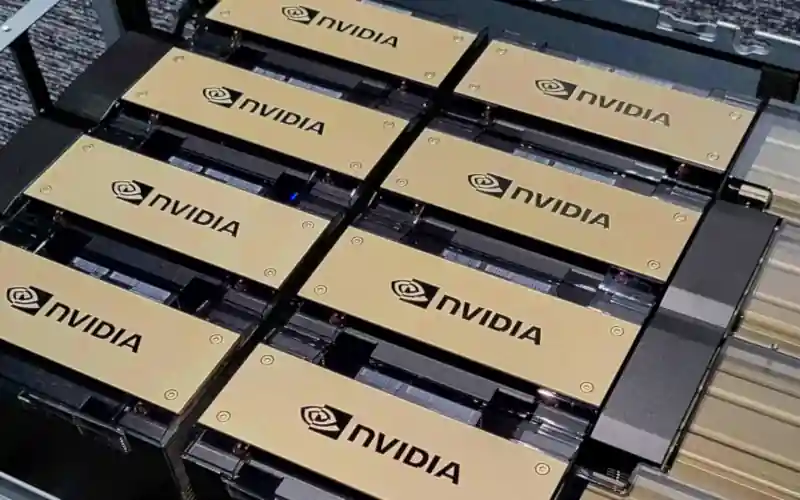
Nvidia has informed Chinese clients it is evaluating additional production capacity for the H200 (pictured). Orders have exceeded current output levels, prompting discussions about scaling up supply. The decision follows U.S. President Donald Trump’s announcement that exports of the H200 to China will be permitted, subject to a 25% tariff. Nvidia emphasized that licensed sales to China will not affect its ability to serve U.S. customers.
Major firms such as Alibaba and ByteDance have already expressed interest in placing large orders. However, the Chinese government has not yet approved purchases of the chip. Officials held emergency meetings to assess whether imports should be allowed. Limited quantities of the H200 are currently available, as Nvidia focuses on its newer Blackwell and Rubin lines.
Technical Capabilities and Market Position
The H200, launched last year, is the fastest chip in Nvidia’s Hopper generation. Manufactured by TSMC using 4nm process technology, it offers significant performance gains over previous models. Chinese companies view it as the most powerful chip accessible to them, far surpassing the downgraded H20 released in 2023. Analysts estimate the H200 delivers two to three times the compute performance of China’s most advanced domestic accelerators.
Demand has been driven by cloud service providers and enterprise customers seeking to expand AI workloads. Nvidia has briefed clients on current supply levels but has not disclosed specific figures. TSMC declined to comment on allocations, citing broader capacity planning amid surging global demand. The situation highlights the strain on advanced chip manufacturing resources worldwide.
Industry Implications and Challenges
China is actively promoting its domestic AI chip industry, raising concerns that access to the H200 could slow local development. Proposals have emerged to require purchases of the H200 to be bundled with domestic chips to balance growth. For Nvidia, expanding capacity is complicated by its transition to Rubin and competition with companies like Google for limited TSMC production slots. Balancing global demand with geopolitical pressures remains a challenge.
The H200’s performance advantage underscores why Chinese firms are lobbying for conditional access. Analysts note that domestic production cannot currently meet demand, leaving companies reliant on imports. Nvidia’s decision on whether to expand output will shape both its market position and broader industry dynamics. The outcome will also influence China’s efforts to strengthen its semiconductor ecosystem.
Orbital data centers and alternative computing strategies are being explored globally to address rising demand for AI processing. While Nvidia focuses on terrestrial chip production, companies such as Blue Origin and SpaceX are investigating space-based infrastructure. These initiatives highlight the scale of demand for advanced computing power and the lengths to which firms are willing to go to secure resources. The debate over H200 exports illustrates how geopolitics and technology are increasingly intertwined in shaping the future of AI.