

US Delays $40B Tech Deal With UK
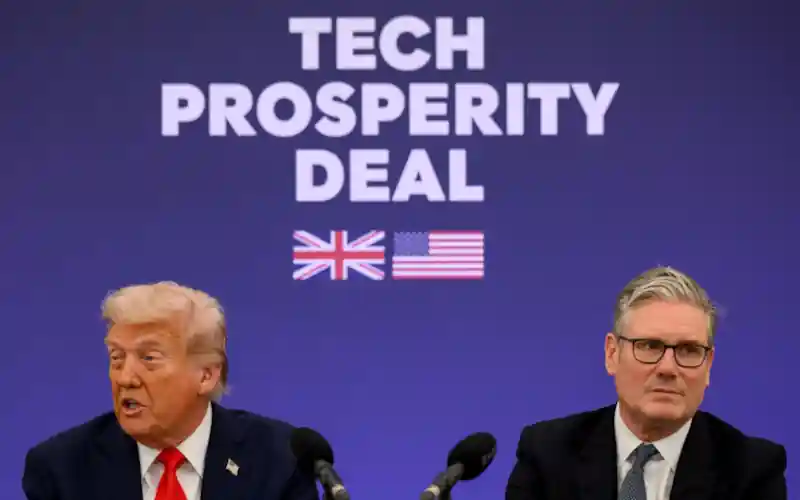
- US frustrated with non-tariff issues, NY Times says
- Trade talks have been stop-start this year
- UK says relations still strong, complex talks take time
- Britain has secured some tariff relief
Concerns Over Regulation and Trade
The “Tech Prosperity Deal,” signed during President Donald Trump’s state visit to Britain in September, was intended to strengthen cooperation in artificial intelligence, quantum computing, and civil nuclear energy. Implementation has stalled amid U.S. frustration with Britain’s online safety rules, digital services tax, and food safety restrictions. Britain had earlier agreed to lower some U.S. tariffs, becoming the first country to do so, but talks in areas such as steel have faltered. A framework agreement in pharmaceuticals was reached earlier this month, showing selective progress despite broader delays.
British officials confirmed the pause in implementation on Tuesday. The New York Times first reported the move, highlighting tensions between the two allies. While the deal was celebrated as a symbol of close ties, its execution has proven more complex. The slowdown underscores the challenges of aligning trade and technology policies across jurisdictions.
Britain’s Position and Ongoing Talks
UK ministers maintain that tariff adjustments, such as higher U.S. beef exports, have not compromised domestic standards. They insist that digital regulations and taxation will not be negotiated away. Prime Minister Keir Starmer’s spokesperson described the discussions as “live negotiations,” emphasizing that relations with Washington remain strong. He noted that such talks are inherently complex and require time to secure.
British Trade Secretary Peter Kyle visited the United States last week to meet trade officials and technology firms. His office stressed the importance of maintaining momentum on all aspects of the agreement. Both sides agreed to resume negotiations in January. Officials continue to frame the pause as part of normal diplomatic processes rather than a breakdown in cooperation.
Industry Investment and Strategic Context
Under the Tech Prosperity Deal, major U.S. technology companies including Microsoft, Google, Nvidia, and OpenAI pledged tens of billions of dollars in UK investments. Britain views these commitments as vital to its role in emerging technologies. The U.S. remains Britain’s largest trading partner, with American firms already investing heavily in UK operations. The deal was designed to reinforce this relationship while advancing shared goals in advanced computing and energy.
The White House has not yet commented on the pause. Analysts note that disagreements over regulation could affect the pace of future cooperation. Britain’s insistence on retaining control over digital and food standards reflects broader debates about sovereignty in trade agreements. The eventual outcome will shape how both countries balance national priorities with global technology partnerships.
The Tech Prosperity Deal is part of a wider trend of bilateral technology agreements aimed at securing leadership in AI and quantum computing. Similar initiatives have been pursued by the U.S. with Japan and the European Union, reflecting global competition in advanced technologies. Experts suggest that delays in implementation highlight the difficulty of reconciling regulatory differences even among close allies. The case illustrates how strategic ambitions in technology are increasingly intertwined with domestic policy debates on safety, taxation, and standards.