Micron Gains as Memory Shortage Deepens
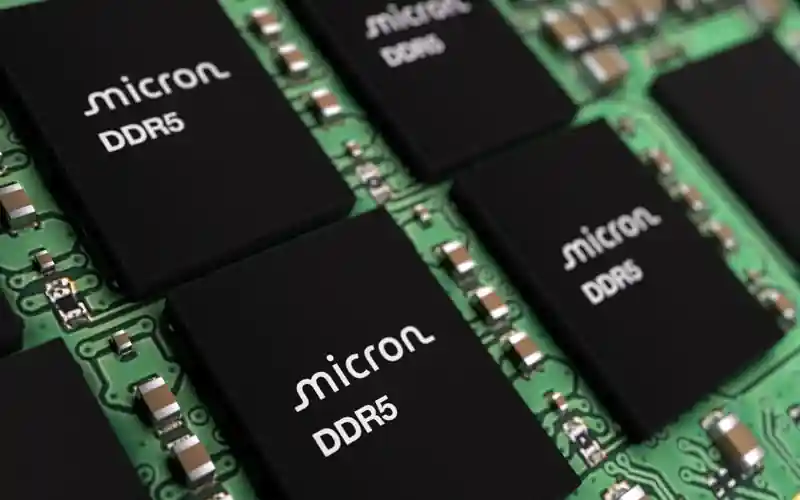
- Micron’s latest profit outlook surged well beyond market expectations, driven by a global shortage of memory chips.
- Strong demand from AI data centres has tightened supply across multiple industries, pushing prices sharply higher.
- Analysts now expect the imbalance to persist for years, even as manufacturers expand production capacity.
Market Reaction and Industry Context
Micron Technology shares climbed nearly 16% on Thursday after the company issued a profit forecast that far exceeded Wall Street estimates. A worldwide shortage of memory chips has lifted prices across sectors ranging from smartphones to hyperscale data centres. Morningstar analysts noted that the current environment is generating unusually strong pricing power for Micron and its competitors. The firm is one of only three major suppliers of high‑bandwidth memory used in AI systems, alongside Samsung and SK Hynix.
Micron’s stock has risen more than 160% this year, reflecting investor confidence in the company’s position within the AI supply chain. Samsung and SK Hynix have also seen substantial gains, with their South Korea‑listed shares more than doubling or tripling in value. If Micron’s momentum continues, the company could add over $40 billion to its market capitalization. The rally underscores how critical memory components have become as AI workloads expand globally.
Tight Supply and Long-Term Outlook
CEO Sanjay Mehrotra has said he expects memory markets to remain constrained beyond 2026. The memory sector is known for its cyclical nature, with periods of oversupply followed by sharp recoveries. Analysts disagree on how long the current upturn—often described as a “supercycle”—will last, but many believe shortages could extend past Micron’s projections. The company has increased its planned 2026 capital expenditures to $20 billion to help meet accelerating demand.
Morningstar analysts anticipate supply tightness continuing well into 2027. J.P. Morgan shares a similar view, suggesting that shortages may persist even as Micron balances shipments between AI data centres and major customers such as Apple. Rising chip costs could also affect consumer markets, with Counterpoint Research forecasting a 2.1% decline in global smartphone shipments next year. Analysts expect premium handset makers like Apple and Samsung to maintain stable access to memory, while lower‑cost Android manufacturers may face more severe constraints.
Broader Market Implications
The ongoing shortage highlights the growing importance of memory technology in AI infrastructure. High‑bandwidth memory has become a critical component for training and running large‑scale models, placing additional pressure on suppliers. Manufacturers are racing to expand capacity, yet the complexity of advanced memory production limits how quickly supply can increase. These constraints have contributed to the sharp rise in pricing and profitability across the sector.
Industry observers note that the current cycle differs from previous ones due to the structural demand created by AI. Traditional markets such as PCs and smartphones remain important, but data‑centre requirements now dominate long‑term planning. Companies that rely on lower‑cost memory configurations may struggle to secure adequate supply, potentially reshaping competitive dynamics in the handset market. The situation illustrates how AI‑driven demand is reshaping the semiconductor landscape in ways that extend far beyond the data‑centre sector.
High‑bandwidth memory has become one of the fastest‑growing segments of the semiconductor industry, with demand projected to triple by 2027. Industry reports indicate that HBM production requires significantly more manufacturing steps than conventional DRAM, contributing to persistent supply bottlenecks. This complexity has strengthened the position of the few companies capable of producing it at scale, giving them unusual pricing leverage during periods of tight supply. The trend suggests that memory technology will remain a strategic bottleneck in AI development for years to come.