

Russia Eyes Lunar Nuclear Power by 2036
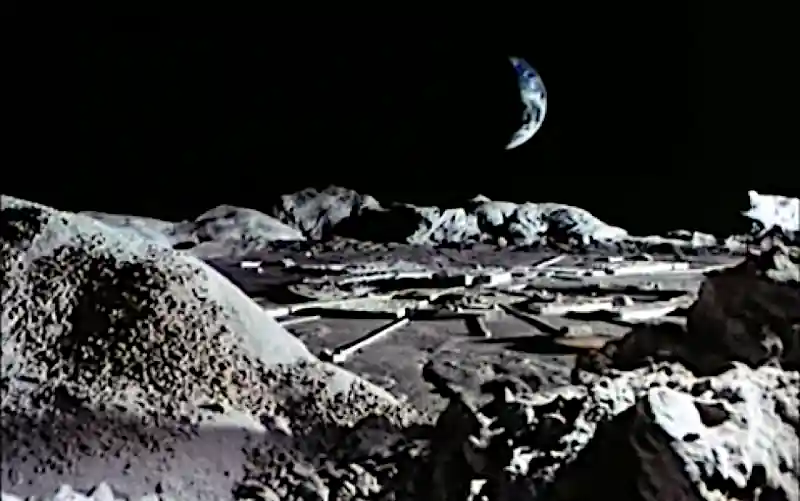
- Russia plans a power plant on the moon
- Plant will power joint Russian-Chinese research
- U.S. also plans a nuclear reactor on the moon
A Renewed Push for Lunar Infrastructure
Russia has announced its intention to construct a lunar power plant by 2036, marking a significant step in its broader space ambitions. The initiative comes as the country seeks to regain momentum in space exploration after years of falling behind the United States and China. Recent setbacks, including the failed Luna‑25 landing in 2023, highlighted the challenges facing Russia’s lunar programme. Nevertheless, officials view long‑term infrastructure as essential for sustaining future missions.
Roscosmos, the state space corporation, confirmed that it has signed a contract with the Lavochkin Association to begin work on the project. The agency did not explicitly state that the facility would be nuclear, though the involvement of Rosatom and the Kurchatov Institute strongly suggests a nuclear‑based design. The planned power plant is expected to support rovers, an observatory, and the infrastructure of the International Lunar Research Station being developed with China. Officials describe the project as a shift from isolated missions toward a continuous presence on the Moon.
Dmitry Bakanov, head of Roscosmos, previously noted that establishing a nuclear power plant on the Moon is one of the corporation’s long‑term goals. He also emphasized ambitions to explore Venus, which is often referred to as Earth’s “sister” planet due to its similar size and composition. The Moon’s distance of 384,400 kilometres from Earth and its stabilizing effect on the planet’s axial tilt underscore its scientific importance. Its influence on ocean tides further highlights its role in Earth’s natural systems.
Global Competition Intensifies
Russia is not alone in pursuing nuclear energy solutions for lunar operations. NASA announced in August that it intends to deploy a nuclear reactor on the Moon by early fiscal year 2030. U.S. officials have framed the effort as part of a broader competition with China to establish a sustained presence on the lunar surface. Energy production is considered a critical requirement for supporting human activity and enabling future missions to Mars.
American officials have acknowledged that the United States is currently behind in the race to build lunar infrastructure. Sustained energy supply is viewed as essential for maintaining life‑support systems, powering scientific instruments, and supporting long‑duration missions. International regulations prohibit nuclear weapons in space but allow nuclear energy sources under specific safety conditions. These rules provide a framework for the development of lunar reactors by multiple nations.
Analysts suggest that the growing interest in lunar resources is contributing to renewed geopolitical competition. Estimates from NASA indicate that the Moon may contain up to one million tonnes of Helium‑3, a rare isotope with potential applications in future fusion technologies. Rare earth elements such as scandium, yttrium, and the lanthanide group are also present, according to research by Boeing. These materials are essential for electronics, renewable energy systems, and advanced manufacturing.
Scientific and Strategic Implications
The development of lunar power infrastructure could reshape the future of space exploration. Reliable energy sources would enable continuous scientific research, autonomous operations, and long‑term habitation. Nuclear systems are particularly attractive due to their ability to operate independently of sunlight, which is limited during the Moon’s two‑week‑long nights. Such capabilities are expected to support both robotic and human missions.
Russia’s collaboration with China on the International Lunar Research Station reflects a growing trend toward multinational partnerships. Joint projects allow countries to share costs, expertise, and technological capabilities. The station is envisioned as a long‑term scientific outpost that could host experiments, resource extraction efforts, and advanced robotics. Its development signals a shift toward more permanent infrastructure beyond Earth’s orbit.
The renewed focus on lunar exploration also highlights the evolving role of private companies. Commercial launch providers have transformed access to space, reducing costs and accelerating mission timelines. These changes have influenced national strategies and increased pressure on traditional space agencies to innovate. As competition intensifies, countries are reassessing their long‑term goals and investment priorities.
One lesser‑known detail is that early concepts for lunar nuclear reactors date back to the 1960s, when both the United States and the Soviet Union explored compact fission systems for space missions. Although none were deployed on the Moon, several small reactors were successfully used in Earth orbit. These historical experiments laid the groundwork for today’s renewed interest in extraterrestrial nuclear power. Modern designs benefit from decades of advances in materials science, safety engineering, and autonomous control systems.