
China Pushes Forward in AI Despite Chipmaking Limits
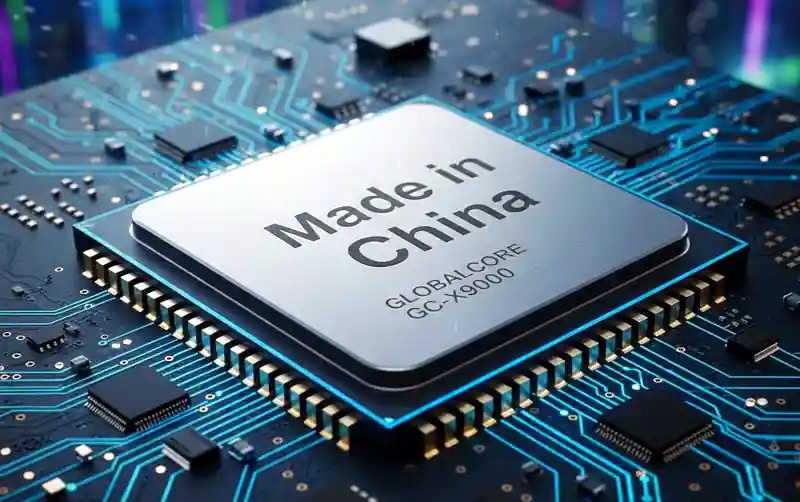
- Chinese AI firms positioned to co-develop hardware and software, industry experts say.
- Lack of advanced lithography machines a main hurdle to having a Chinese AI world leader, they say.
- Younger Chinese AI entrepreneurs have more appetite for risk.
Rising Confidence in Domestic AI Firms
China’s leading AI researchers believe the country is closing in on the United States’ technological lead, even as restrictions on advanced chipmaking equipment continue to hinder progress. Strong stock market debuts from “AI tiger” startups MiniMax and Zhipu AI in Hong Kong this week have reinforced confidence in the sector. Beijing has been accelerating AI and semiconductor listings to strengthen domestic alternatives to U.S. technology. These moves reflect a broader national strategy to reduce reliance on foreign suppliers and support homegrown innovation.
Yao Shunyu, formerly a senior researcher at OpenAI and now Tencent’s chief AI scientist, said China could see one of its companies become a global AI leader within three to five years. He noted that the country benefits from robust infrastructure and energy capacity, but still faces bottlenecks in chip production and software ecosystems. China has developed a prototype extreme‑ultraviolet lithography machine, a key tool for cutting‑edge chip fabrication. However, the machine has yet to produce functional chips and may not do so until 2030, according to sources familiar with the project.
Investment Gaps and Computing Power Challenges
Industry leaders at a Beijing AI conference acknowledged that the United States maintains a significant advantage in computing power due to its large‑scale infrastructure investments. Lin Junyang, technical lead for Alibaba’s Qwen large language model, estimated that U.S. computing resources exceed China’s by one to two orders of magnitude. He noted that American platforms such as OpenAI continue to invest heavily in next‑generation research. Chinese firms, by contrast, often allocate most of their available computing power to product delivery rather than experimentation.
Limited resources have pushed Chinese researchers to pursue more efficient approaches, particularly algorithm‑hardware co‑design. This method allows large AI models to run on smaller, less expensive hardware by optimizing both software and underlying architecture. Lin described this constraint‑driven innovation as a practical necessity rather than a strategic choice. The approach has nonetheless helped Chinese companies remain competitive despite hardware shortages.
A Culture Shift Toward Higher‑Risk Innovation
Zhipu AI founder Tang Jie, whose company raised HK$4.35 billion in its IPO, highlighted a growing willingness among younger Chinese entrepreneurs to take on high‑risk projects. This mindset has traditionally been associated with Silicon Valley, but Tang sees it emerging more strongly in China’s AI sector. He argued that creating an environment that supports long‑term, high‑risk innovation would benefit the country’s technological ambitions. Government support, he said, could help sustain these efforts by giving researchers more time and flexibility.
China’s AI community views this cultural shift as an important complement to technical progress. Increased risk‑taking may help offset limitations in hardware and funding by accelerating experimentation and encouraging unconventional solutions. Researchers at the conference emphasized that innovation often emerges from constraints rather than abundance. The combination of rising entrepreneurial confidence and targeted policy support could shape China’s trajectory in the global AI landscape.
Extreme‑ultraviolet lithography machines—central to advanced chip production—are currently dominated by a single Dutch company, ASML. Export controls have limited China’s access to these tools, prompting domestic efforts to develop alternatives. Even a working prototype represents a significant milestone, as only a handful of countries have attempted to build such machines. The long development timeline underscores the complexity of semiconductor manufacturing and the strategic importance of chip technology in global competition.