
EU Plans IRIS2 Launch for 2029
- The European Union aims to activate initial IRIS2 satellite services in 2029, marking a faster timeline than previously expected.
- The programme is designed to strengthen Europe’s strategic autonomy in secure communications.
- Its development reflects growing geopolitical pressure and the need for independent space‑based infrastructure.
Accelerated Timeline for Europe’s Satellite Network
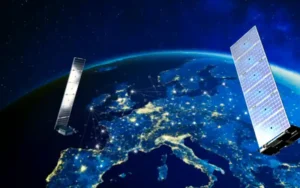
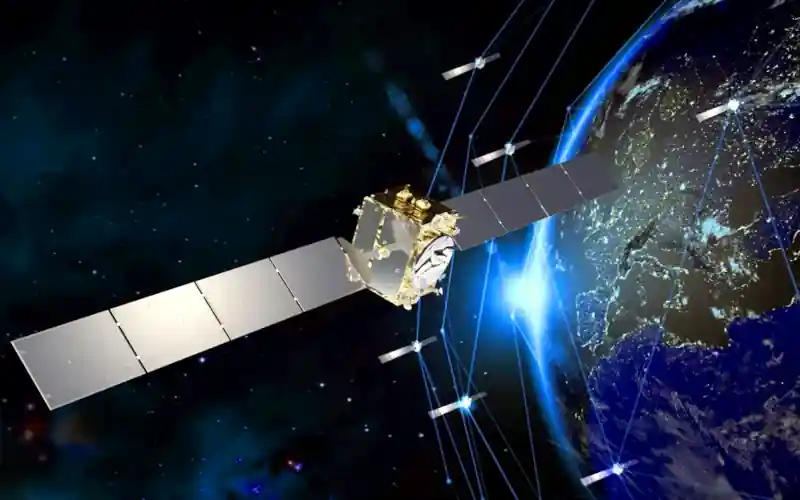
The EU’s IRIS2 constellation is planned as a 290‑satellite, multi‑orbit system intended to provide secure communications across the bloc. Officials now expect the first government‑focused services to begin in 2029, a year earlier than originally scheduled. The shift signals an effort to speed up Europe’s space capabilities amid rising geopolitical tensions. The programme is positioned as a counterpart to rapidly expanding commercial networks such as Starlink.
European leaders view IRIS2 as a tool for reducing reliance on non‑EU providers for critical communications. Russia’s invasion of Ukraine and broader political frictions have highlighted the vulnerability of foreign‑controlled satellite infrastructure. Kubilius, the EU defence and space commissioner, said Europe must develop its own “sovereign military cloud” to protect sensitive data flows. His comments reflect a growing overlap between civilian space assets and defence‑related applications.
Interim Services Through GOVSATCOM
Although IRIS2 is still several years away, the EU recently launched GOVSATCOM to bridge the gap. The system links eight satellites from five member states to offer initial secure communications for governments and militaries. These services ensure that the bloc is not left without essential capabilities during the transition period. Kubilius noted that Europe should still accelerate development due to its dependence on American systems.
Europe continues to face difficulties in matching the pace of satellite launches achieved by private companies such as SpaceX. Early missile‑warning capabilities also remain an area where the EU seeks improvement. Some member states have already begun investing heavily in national programmes to address these gaps. Germany, for example, has allocated €35 billion to space defence and is collaborating with France on the Odin’s Eye early‑warning system planned for the early 2030s.
IRIS2 is part of a broader trend in which governments worldwide are expanding secure satellite networks to support defence, communications, and critical infrastructure. Several analysts note that multi‑orbit constellations are becoming increasingly common as they offer resilience against interference and provide more flexible coverage.