
Glass Storage Tech Reaches New Milestone
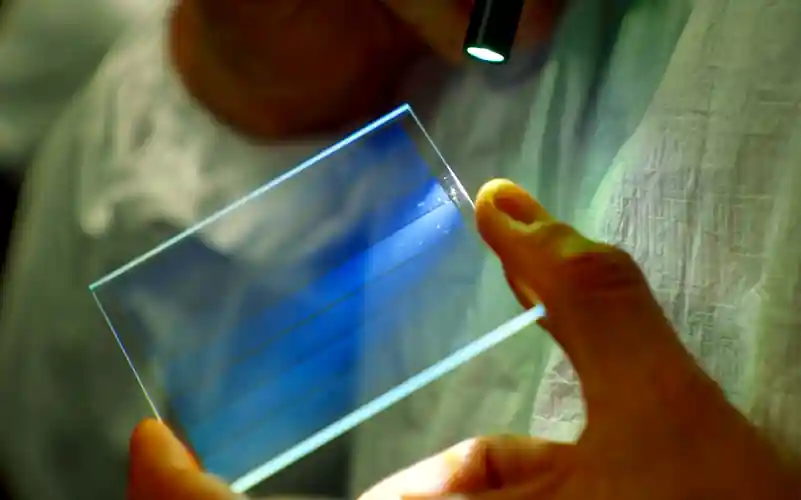
- Researchers behind Project Silica have demonstrated major advances in storing data inside glass, a technology designed to preserve information for thousands of years.
- Their latest work shows that ordinary borosilicate glass can now be used instead of costly fused silica, significantly improving scalability.
- The findings point toward a future where long‑term digital preservation becomes far more durable and sustainable.
Moving Archival Storage Beyond Traditional Media
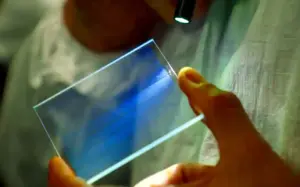
Long‑term digital preservation has long been constrained by the limited lifespan of magnetic tapes, hard drives and other conventional media. These systems degrade within decades, making them unsuitable for safeguarding information across generations. Project Silica aims to solve this problem by encoding data inside glass using femtosecond laser pulses, creating a medium that can last up to 10,000 years. Glass is naturally resistant to heat, water and dust, making it an attractive candidate for ultra‑long‑term storage.
Earlier versions of the technology relied on pure fused silica, a material that is expensive and difficult to manufacture. The new research, published in Nature, shows that borosilicate glass—commonly used in cookware and oven doors—can also support the storage process. This shift addresses major barriers to commercialization by lowering material costs and improving availability. The team also developed accelerated aging tests that suggest the encoded data remains stable for millennia.
Scientific Breakthroughs in Voxel Writing
The paper outlines several advances in how data is written into glass. One improvement involves birefringent voxel writing, where the team reduced the number of laser pulses needed to form a voxel from many to just two. They also introduced a pseudo‑single‑pulse method that splits a single pulse to write two voxels simultaneously, enabling faster encoding. These refinements allow high‑speed beam scanning across the glass while maintaining precision.
Another breakthrough is the introduction of phase voxels, which modify the glass’s phase rather than its polarization. Phase voxels require only a single laser pulse and can be created in borosilicate glass, expanding the range of usable materials. Reading phase information is more complex due to higher inter‑symbol interference, but the researchers mitigated this using machine‑learning classification models. Together, these techniques significantly enhance the efficiency and reliability of glass‑based storage.
Toward Practical, High‑Speed Glass Storage
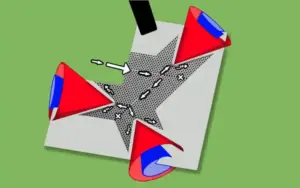
The team also demonstrated parallel writing capabilities by combining thermal modeling with a multi‑beam delivery system. This approach allows many voxels to be written at once, dramatically increasing throughput. Light emissions produced during voxel formation can be used for calibration and real‑time control, supporting automated writing operations. Additional work focused on optimizing symbol encodings and improving error‑correction strategies using machine learning.
Longevity testing was another key component of the research. A new nondestructive optical method allows scientists to assess voxel aging without damaging the glass. Accelerated aging tests indicate that data stored in this medium should remain intact for at least 10,000 years. These results suggest that glass storage could become a practical solution for institutions seeking sustainable, long‑term preservation.
Project Silica has already demonstrated several high‑profile proofs of concept, including storing the 1978 Superman film on quartz glass and collaborating with the Global Music Vault to preserve cultural archives under Arctic ice. The initiative has also explored broader innovations in archival system design, robotics and optical components. As digital data continues to grow exponentially, long‑lived storage technologies like this may become essential for libraries, studios and scientific institutions. The shift to borosilicate glass marks a significant step toward making such systems commercially viable.