
Microbe Survives Mars‑Like Impact Forces
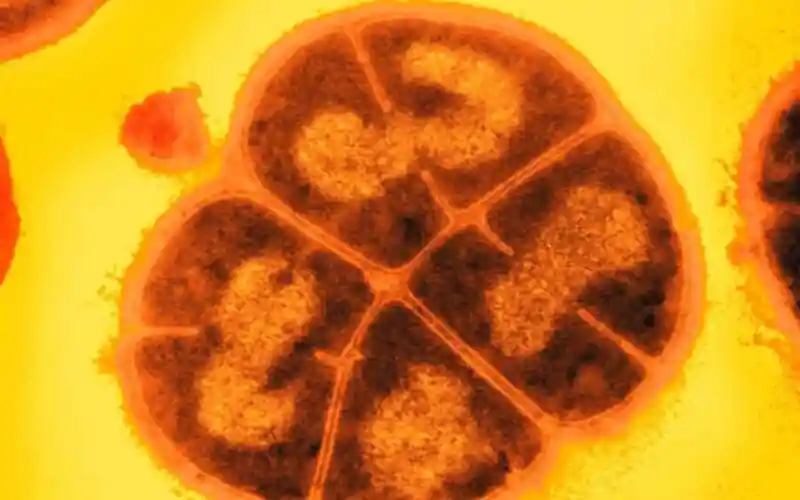
- A new study shows that the resilient bacterium Deinococcus radiodurans can withstand shock pressures similar to those produced by massive asteroid impacts on Mars.
- The findings suggest that microbial life could potentially survive violent ejection from a planet’s surface.
- This raises new possibilities for how life might travel between worlds in our solar system.
Testing Life Under Extreme Planetary Conditions
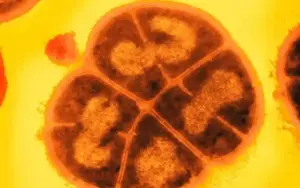
Researchers have long suspected that certain microbes might endure the intense forces generated during asteroid impacts, but direct experimental evidence has been limited. A team led by Lily Zhao and K. T. Ramesh set out to test this idea by recreating Mars‑level shock pressures in a controlled laboratory environment. Their experiment involved placing Deinococcus radiodurans between two steel plates and striking the setup with a third plate to generate pressures up to 3 gigapascals. These conditions mimic the crushing forces that occur when an asteroid hits a planetary surface and ejects material into space.
The bacterium is already known for its remarkable resistance to radiation, desiccation, and other environmental extremes. Its durability has made it a frequent subject in studies exploring the limits of life and the possibility of interplanetary transfer. This new research expands that understanding by showing that the microbe can survive pressures far beyond what most organisms can tolerate. The results suggest that the early stages of planetary ejection may not be as biologically prohibitive as once assumed.
How the Microbe Responded to Shock Pressures
The team monitored the bacteria’s response by analyzing gene expression patterns after exposure to different pressure levels. Samples subjected to 2.4 gigapascals began to show ruptured membranes, indicating significant physical stress. Even so, the structure of the cell envelope helped protect a large portion of the population, allowing roughly 60% of the microbes to survive. Transcription profiles revealed that the surviving cells prioritized repairing damage immediately after the simulated impact.
These findings demonstrate that D. radiodurans can endure not only the shock itself but also the aftermath, where rapid recovery is essential for survival. The ability to repair cellular structures under such extreme conditions strengthens the case for microbial resilience during planetary ejection events. Researchers argue that microorganisms may be capable of surviving even harsher environments than previously believed. This resilience could play a role in natural processes that move biological material between planets.
Implications for Life Beyond Earth
The study adds weight to the hypothesis of lithopanspermia, the idea that life can travel between planets via rocks blasted into space. Craters on Mars and the Moon show how frequently celestial bodies are struck by incoming material, making such transfers theoretically possible. If microbes can survive the initial shock, they might also endure the cold vacuum of space and the eventual landing on another world. This possibility expands the range of environments where scientists might search for evidence of ancient or transported life.
Understanding how life responds to extreme forces also informs planetary protection efforts. Space agencies must consider whether terrestrial microbes could accidentally contaminate other worlds during missions. Studies like this help refine models of microbial survival and guide sterilization protocols for spacecraft. They also offer insight into how early Earth might have exchanged material with neighboring planets during the solar system’s more chaotic periods.
Deinococcus radiodurans is often called “Conan the Bacterium” due to its extraordinary resilience. It can survive doses of radiation thousands of times higher than what would kill a human, and it can reassemble its shattered DNA with remarkable efficiency. The organism was first discovered in canned meat that had spoiled despite being irradiated, highlighting its unexpected toughness. Its abilities continue to make it a key model organism for astrobiology and studies of life’s extreme limits.