
Cosmic Events to Watch in 2026
- The moon will play a central role in space exploration during 2026 as new astronaut missions and robotic landers head toward the lunar surface.
- Several rare astronomical events, including solar eclipses, planetary alignments, and bright supermoons, will also shape the year’s skywatching calendar.
- Meanwhile, scientists continue to track a recently discovered interstellar comet, highlighting how improved observation technology is expanding our view of the universe.
The coming year is expected to bring a series of notable astronomical events, ranging from lunar missions and eclipses to unusual planetary alignments. Observers on Earth will see a combination of predictable celestial mechanics and rare occurrences that together shape the skywatchingskywatching calendar. Both professional astronomers and casual observers are likely to find several opportunities to observe the cosmos without specialized equipment. At the same time, ongoing space exploration programs will place the moon back at the center of international attention.
Human spaceflight is also preparing for a return to the lunar environment after more than half a century. A crewed mission scheduled for early in the year will travel around the moon before returning to Earth, marking a major milestone for modern lunar exploration. NASA astronaut Reid Wiseman, who is expected to command the mission, has noted that astronauts may observe regions of the lunar far side that were not closely examined during the Apollo era. Such observations could help geologists and mission planners evaluate possible landing sites for future expeditions.
The mission will involve three American astronauts and one Canadian astronaut flying past the moon before performing a turnaround maneuver behind it. After circling the lunar far side, the spacecraft will head directly back toward Earth to complete a ten-day flight. No landing will take place during this mission because surface exploration is planned for later flights in the Artemis program. Those future missions aim to place astronauts back on the moon’s surface for the first time since the early 1970s.
New robotic missions target the moon
Human exploration is only one part of the renewed focus on the moon. Several robotic landers from both government agencies and private companies are scheduled to attempt lunar missions during 2026. Interest in these projects has grown in recent years because the moon is increasingly viewed as a potential site for scientific research and future resource exploration.
Blue Origin, the space company founded by Jeff Bezos, is expected to launch a prototype of its Blue Moon lander during the year. The demonstration vehicle stands about twenty-six feet, or eight meters, tall, making it larger than the lunar module used during the Apollo missions. A future crewed version of the lander is expected to be almost twice that height. That system is being developed to support NASA astronauts who will eventually travel to the lunar surface.
Other private space companies are also planning additional attempts at robotic lunar landings. Astrobotic Technology and Intuitive Machines are preparing missions that will carry scientific instruments designed to study the lunar environment. Firefly Aerospace, which previously completed a successful private lunar landing, intends to target the moon’s far side with a new spacecraft. Meanwhile, China is planning its own exploration of the lunar south pole, including a rover and a specialized hopping vehicle capable of entering permanently shadowed craters in search of water ice.
Eclipses and planetary alignments
Celestial events visible from Earth will also attract attention throughout the year. One of the most prominent will be a total solar eclipse on August twelve. The eclipse will begin in the Arctic and move across Greenland, Iceland, and Spain before ending over the Atlantic Ocean. During totality, which will last approximately two minutes and eighteen seconds, the moon will pass directly between Earth and the sun and briefly block sunlight from reaching the surface.
Earlier in the year another eclipse will occur under more unusual viewing conditions. On February seventeen an annular solar eclipse, often described as a “ring-of-fire” eclipse, will take place over Antarctica. Only a limited number of research stations in the region will have ideal viewing conditions. Observers in South Africa and the southern parts of Chile and Argentina will see the event as a partial eclipse.
Two lunar eclipses are also expected in 2026. A total lunar eclipse will occur two weeks after the February annular eclipse. Later in the year a partial lunar eclipse will take place at the end of August. These events occur when Earth passes between the sun and the moon, causing Earth’s shadow to fall across the lunar surface.
Planetary alignments will offer another opportunity for skywatchers. Around February twenty-eight six of the solar system’s eight planets will appear along the evening sky in a loose line. Mercury, Venus, Jupiter, and Saturn should be visible with the naked eye shortly after sunset if weather conditions allow. Uranus and Neptune will be more difficult to see and generally require binoculars or a telescope.
Supermoons and auroras
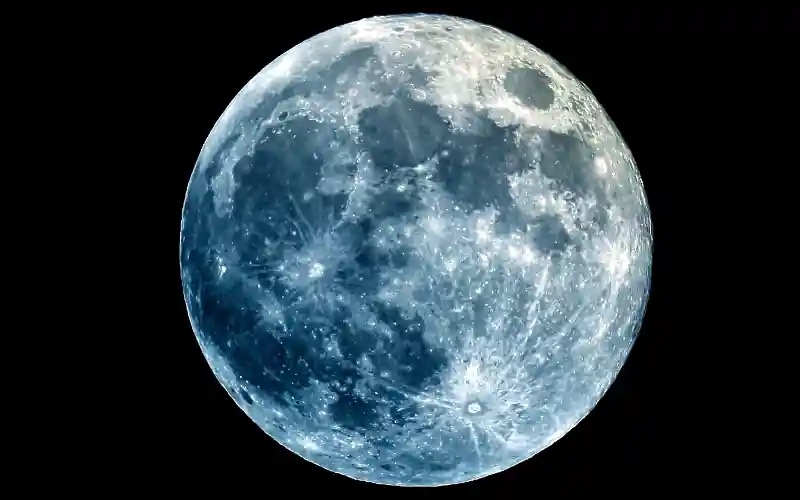
The moon itself will also produce several visually striking events during the year. Three supermoons are expected in 2026, which occur when a full moon coincides with the moon’s closest approach to Earth during its orbit. Because the moon follows a slightly elliptical path around Earth, these moments make the lunar disk appear somewhat larger and brighter than usual.
The first supermoon will occur in early January and will coincide with a meteor shower. However, the bright moonlight may make it harder to see faint meteors during the event. A second supermoon will appear on November twenty-four. The final and closest supermoon of the year will occur during the night of December twenty-three into December twenty-four, passing about two hundred twenty-one thousand six hundred sixty-eight miles from Earth.
Solar activity is also expected to continue producing auroras across both hemispheres. Charged particles from eruptions on the sun can interact with Earth’s magnetic field, creating the northern and southern lights. These displays may appear in regions farther from the poles during periods of strong geomagnetic storms. Scientists note that solar activity should gradually decline as the current eleven-year solar cycle moves toward its quieter phase.
Astronomers are also tracking a newly discovered interstellar comet known as 3I/Atlas. The object passed near Earth in December and is gradually fading as it travels farther away. During March the comet is expected to pass near Jupiter before continuing its path out of the solar system. Researchers estimate that it will take roughly a decade for the object to completely leave the region influenced by the sun’s gravity.
Interestingly, 3I/Atlas is only the third known interstellar object ever detected passing through our solar system. Earlier visitors included the asteroid-like object ʻOumuamua and the comet Borisov. Improved telescope technology and automated sky surveys are increasing the chances of finding similar objects in the future. Many scientists now expect that additional interstellar visitors will eventually be detected as observation systems become more sensitive and cover larger portions of the sky.