

ABB signals openness to larger acquisitions

Peter R. Voser - ABB
- ABB is preparing for a more active acquisition strategy after several years of divestments.
- The company is considering deals ranging from mid‑sized purchases to potentially multiple multi‑billion‑dollar transactions.
- Chairman Peter Voser says the focus remains on growth in electrification, motion, and automation.
ABB’s leadership is signalling a shift toward more assertive dealmaking as the Swiss engineering group looks to accelerate growth following a period of portfolio trimming. The company, which recently completed the sale of its robotics division, now sees room for acquisitions that could exceed previous deal sizes. Its chairman, Peter Voser, says ABB’s financial position and incoming cash flows provide flexibility for both medium and large transactions. He also notes that while exceptionally large deals are not the norm for ABB, they are not entirely off the table.
Strategic shift after years of divestments
ABB has spent recent years streamlining its operations, focusing on core areas and selling businesses that no longer fit its long‑term strategy. The divestment of its robotics unit to SoftBank last year marked one of the most significant steps in this process. With that transaction bringing in around $5 billion, ABB now has additional resources to pursue acquisitions that support its growth ambitions. Voser explained that the company is evaluating targets worth several hundred million dollars but is prepared to consider larger opportunities if they align with strategic priorities.
The chairman declined to comment on reports linking ABB to a potential bid for French electrical equipment maker Legrand. Such a deal would have been the largest in ABB’s history, given Legrand’s market value of roughly $43 billion. Although Voser did not confirm any interest, he acknowledged that ABB would not rule out a deal of that scale in the future. He added, however, that transactions closer in size to ABB’s $4.2 billion acquisition of motor manufacturer Baldor are more realistic.
Growth ambitions supported by M&A
ABB competes with major industrial players such as Siemens and Schneider Electric, and it has been working to improve profitability while sharpening its business focus. The company’s future acquisitions will concentrate on electrification, motion, and automation—areas where ABB sees long‑term demand. Voser said the company is continuously engaged in discussions about smaller deals, while larger transactions remain an active topic at the board level. He emphasized that ABB aims for organic growth of 5–7% annually but expects acquisitions to help push growth beyond that range.
ABB: Recent M&A Deals
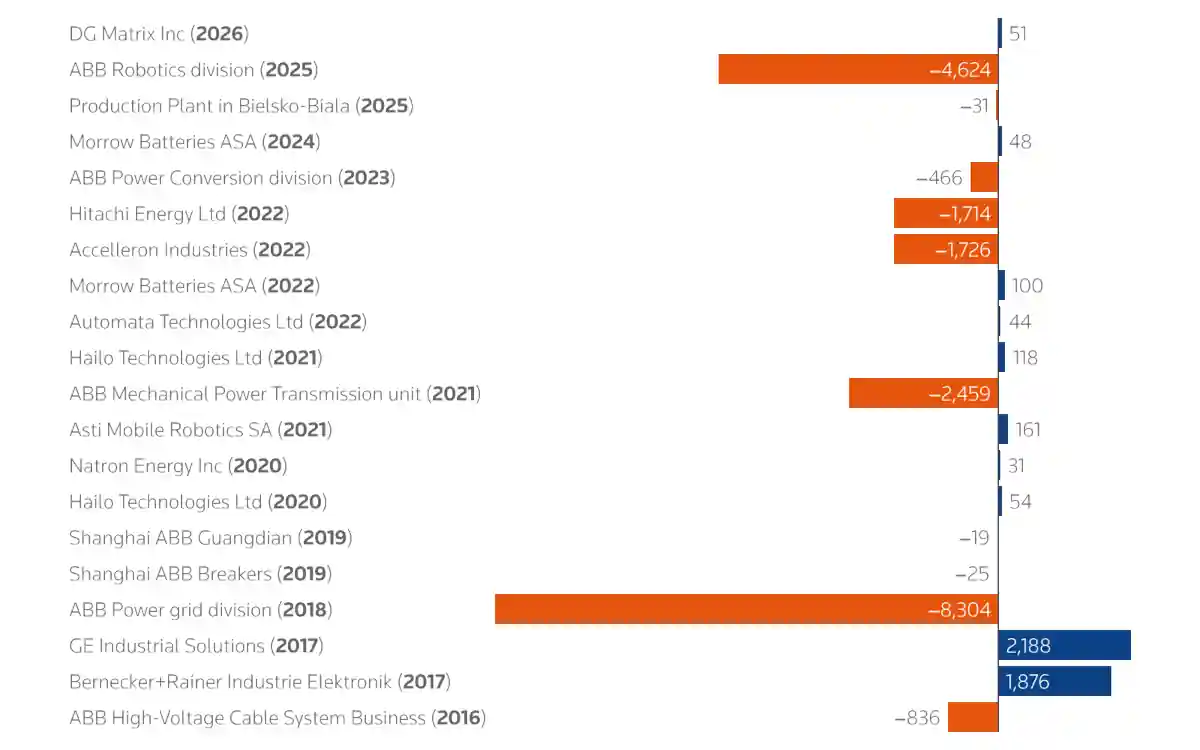
The company’s strategy reflects broader industry trends, as demand for automation and electrification continues to rise. Data centres, electric mobility, and industrial automation are among the sectors driving investment. ABB sees these markets as central to its long‑term expansion plans. The company’s renewed acquisition appetite suggests it intends to strengthen its position in these fast‑growing segments.
Global risks and market outlook
Despite its growth plans, ABB is monitoring geopolitical risks that could affect global demand. Voser warned that the ongoing Middle East conflict, which began in late February, could disrupt energy markets if it continues. He noted that prolonged instability could lead to energy shortages and higher prices, which would likely dampen investment and demand. Even if the conflict ends soon, he said restarting energy infrastructure such as refineries would take months.
At the same time, ABB remains optimistic about demand linked to the electrification of data centres, particularly those supporting artificial intelligence workloads. This sector has been one of the strongest growth drivers for the company. However, Voser cautioned that some AI‑focused firms relying heavily on debt and lacking revenue may face financial difficulties. Such failures could create credit stress, especially in the United States.
Looking ahead, ABB is also preparing for changes at the board level. Voser, who has served as chairman since 2015, indicated that a board refresh will begin next year. He suggested that his own departure could come in 2028, when he turns 70. The transition is expected to support long‑term governance stability as ABB pursues its next phase of growth.
ABB’s renewed interest in acquisitions aligns with a broader wave of consolidation in the industrial technology sector. Competitors such as Siemens and Schneider Electric have also been active in reshaping their portfolios to capture growth in automation and electrification. Industry analysts note that rising demand for energy‑efficient systems, AI‑driven automation, and resilient power infrastructure is pushing companies to scale up through strategic deals. This environment may create opportunities for ABB to strengthen its position if it moves decisively.