
Ancient Lunar Magnetism Explained by New Research
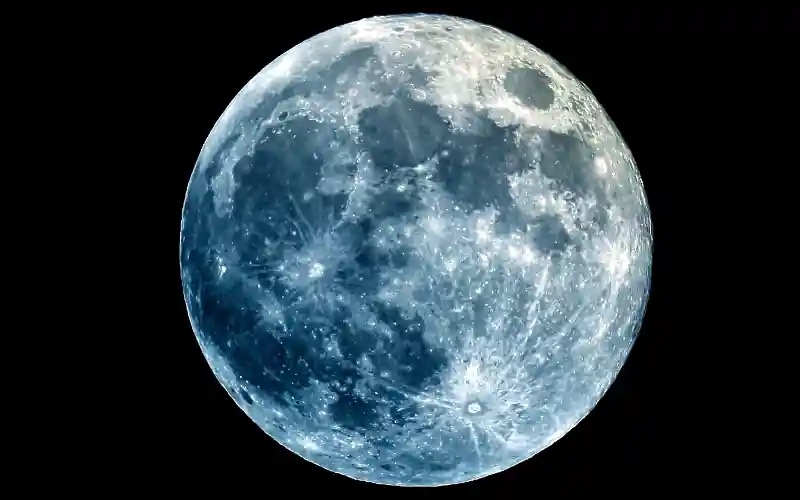
Moon
- The study proposes that the Moon’s strong ancient magnetism came from short‑lived geological events.
- Researchers argue that Apollo samples overrepresent rare magnetic bursts due to landing‑site bias.
- Upcoming lunar missions may help confirm how the Moon’s magnetic field evolved.
Rethinking the Moon’s Magnetic Past
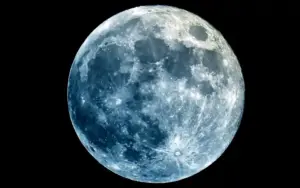
A new scientific analysis offers a compelling explanation for one of lunar science’s longest‑standing puzzles: why some Apollo‑era rock samples show signs of an unexpectedly strong magnetic field. These samples, which are around 3.5 billion years old, contain magnetic signatures that sometimes rival or exceed Earth’s present‑day field strength. Such findings have puzzled researchers for decades because the Moon lacks the internal heat and core dynamics that sustain Earth’s global magnetic field. The latest study, led by researchers at the University of Oxford, suggests that these intense magnetic signals may reflect rare, short‑duration events rather than a long‑lasting lunar dynamo.
The team argues that the Apollo samples represent a biased snapshot of the Moon’s history. Their analysis indicates that the strong magnetic signatures likely came from temporary bursts lasting only a few thousand years. These bursts would have been triggered by specific geological processes deep within the Moon. Earlier interpretations assumed these strong fields persisted for hundreds of millions of years, but the new findings challenge that view.
Titanium‑Rich Rocks Hold the Key
Researchers reexamined a class of lunar rocks known as Mare basalts, which were collected from regions where ancient lava once flowed. They looked for correlations between the rocks’ chemical composition and the strength of their magnetic signatures. A clear pattern emerged: samples with unusually strong magnetism also contained significantly higher levels of titanium. This connection hinted that the processes forming titanium‑rich rocks might also be responsible for generating temporary magnetic surges.
To explore this idea, the team ran computer models simulating how titanium‑rich material behaves near the Moon’s core‑mantle boundary. The models showed that melting such material could briefly increase heat flow from the core. This surge in heat could activate or intensify a dynamo process, producing a stronger magnetic field for a short period. At the same time, the melting would generate titanium‑rich lava that later solidified into the rocks sampled by Apollo astronauts.
Sampling Bias From Apollo Missions
Because the Apollo missions landed in relatively flat, accessible regions dominated by Mare basalts, the samples they returned were not representative of the Moon as a whole. These landing sites happened to coincide with areas where titanium‑rich lava once flowed, meaning the collected rocks disproportionately captured evidence of rare magnetic events. The researchers argue that this sampling bias has shaped scientific understanding for decades. If the missions had landed in different regions, scientists might have concluded that the Moon’s magnetic field was consistently weak.
The study’s authors compare the situation to hypothetical alien explorers landing on Earth only a handful of times. If those landings occurred in geologically unusual areas, the explorers might draw misleading conclusions about the planet’s overall history. The same principle applies to the Apollo missions, which provided invaluable data but also an incomplete picture. The new findings highlight the importance of broadening the range of lunar samples available for study.
Implications for Lunar Science and Future Missions
The researchers estimate that the intense magnetic episodes lasted only a few thousand years each, which is extremely brief compared to the Moon’s multibillion‑year history. Their hypothesis fits the available evidence but relies on several assumptions due to the limited number of lunar samples. More data will be needed to confirm whether these short‑lived magnetic bursts were indeed responsible for the strong signatures found in Apollo rocks. Additional modeling and future sample collection will help refine the picture.
Today, the Moon’s magnetic field is weak and patchy, lacking the global structure seen on Earth. Previous studies have proposed alternative explanations for the ancient magnetic signatures, including asteroid impacts that could temporarily magnetize surface materials. The new research does not rule out such contributions but suggests that internal geological processes played a more significant role than previously thought. Understanding these processes will help scientists reconstruct the Moon’s early evolution.
The upcoming Artemis missions are expected to provide a wider variety of lunar samples, including material from regions never visited by Apollo astronauts. These missions will allow researchers to test predictions about which rock types preserve strong magnetic signatures. The study, published in Nature Geoscience, adds momentum to renewed scientific interest in the Moon’s interior and magnetic history. Interestingly, earlier investigations have shown that some lunar rocks contain metallic particles aligned in ways that record ancient magnetic fields, offering a natural archive of the Moon’s changing interior processes.