
Amazon explores new smartphone after Fire Phone failure
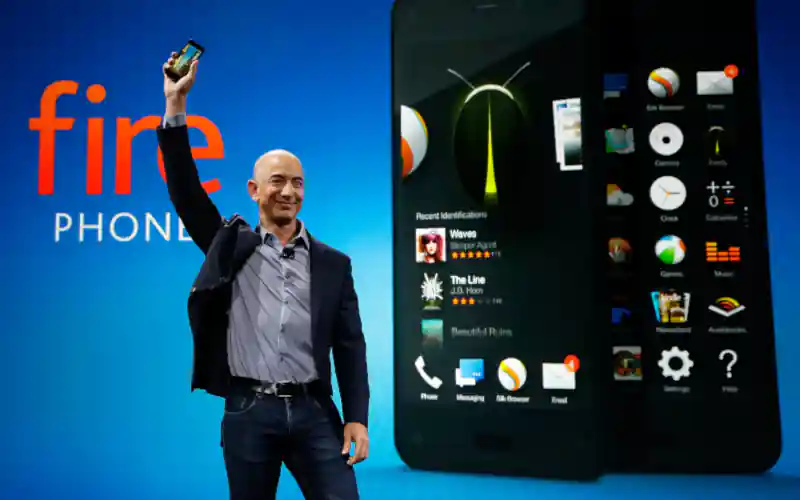
Jeff Bezos: here it is fire phone
- Amazon is developing a new smartphone more than a decade after discontinuing the Fire Phone.
- The project, known internally as “Transformer,” aims to integrate AI and Alexa into a personalized mobile device.
- Its future remains uncertain as Amazon evaluates strategy, costs and market conditions.
Amazon is once again attempting to enter the smartphone market, more than ten years after the Fire Phone became one of the company’s most visible hardware missteps. The new initiative, internally called “Transformer,” is being developed within Amazon’s devices and services division, according to several people familiar with the project. These sources describe the device as a personalized mobile companion designed to integrate deeply with Alexa and Amazon’s broader ecosystem. Although the company has not publicly acknowledged the effort, the project represents a renewed push to realize Jeff Bezos’ long‑standing vision of a voice‑driven computing assistant that follows users throughout their day.
The Fire Phone’s failure in 2014 left a lasting mark on Amazon’s hardware strategy, as the device struggled with limited app support and experimental features that drained battery life. Despite offering a free year of Prime membership and later slashing the price, Amazon discontinued the phone after just 14 months and took a $170 million charge on unsold inventory. The experience made Amazon more cautious about entering mature hardware categories dominated by entrenched competitors. Even so, the company has continued to explore ways to extend Alexa beyond smart speakers and into more personal devices.
A new attempt at mobile personalization
The Transformer project is envisioned as a mobile device that can streamline access to Amazon services, including shopping, Prime Video, Prime Music and food delivery through partners such as Grubhub. People familiar with the effort say the phone is intended to serve as a highly personalized interface that adapts to user preferences throughout the day. Amazon sees the device as a potential bridge between its cloud‑based AI capabilities and everyday consumer behavior. This approach aligns with the company’s broader goal of increasing customer engagement across its ecosystem.
Artificial intelligence is expected to play a central role in the device’s design. Developers working on the project have explored ways to reduce reliance on traditional app stores by enabling AI‑driven interactions that bypass the need to download or register for apps. Such a shift would represent a significant departure from the standard smartphone experience, though it also carries risks given the mixed reception of recent AI‑native hardware. Devices like the Humane AI Pin and Rabbit R1 attempted similar concepts but were discontinued after poor reviews and limited adoption.
Competition and market challenges
Amazon faces a difficult landscape if it chooses to move forward with the Transformer phone. Apple and Samsung together accounted for roughly 40% of global smartphone sales last year, according to Counterpoint Research, leaving limited room for new entrants. Market conditions are also tightening, with smartphone shipments projected to fall 13% in 2026 due to rising memory chip prices. These trends raise questions about whether consumers are willing to adopt a new device, especially one that may diverge from familiar app‑based ecosystems.
Analysts note that Amazon’s previous failure does not necessarily preclude success, but the company will need to offer a compelling reason for users to switch. Many consumers remain deeply attached to existing app stores, which provide access to essential services and entertainment. Without strong incentives or unique capabilities, a new Amazon phone could struggle to gain traction. The company has not yet approached wireless carriers about potential partnerships, suggesting the project remains in an exploratory phase.
ZeroOne and the push for “breakthrough” devices
The Transformer project is being led by ZeroOne, a relatively new group within Amazon’s devices unit tasked with developing innovative hardware. The team is headed by J Allard, a former Microsoft executive known for his work on the Zune music player and Xbox console. Under the leadership of Panos Panay, Amazon’s devices division has been working to reverse years of unprofitability by refining its product strategy. One example is a forthcoming tablet that will run Android instead of Fire OS, marking a notable shift in Amazon’s approach to software.
People involved in the Transformer project say Amazon has explored both a full‑featured smartphone and a minimalist “dumbphone” variant. A simpler device could appeal to users seeking to reduce screen time or parents wanting limited‑function phones for teenagers. The Light Phone, a $700 minimalist handset with only basic tools, has served as one source of inspiration. Feature phones and similar devices accounted for 15% of global handset sales in 2025, indicating a potential niche market for alternatives to traditional smartphones.
Carrying multiple phones is more common than many assume, though reliable data is scarce. Analysts note that dual‑phone usage is often driven by privacy concerns, workplace policies or parental controls. This trend could create opportunities for secondary devices that complement, rather than replace, mainstream smartphones—an angle Amazon may be considering as it evaluates the future of the Transformer project.