
Acer Launches New Kompanio‑Powered Student Chromebooks
- Acer has introduced two new education‑focused Chromebooks built on MediaTek’s Kompanio 540 processor.
- The devices aim to support modern classroom needs with durable designs, long battery life and flexible form factors.
- Schools are expected to benefit from lower maintenance costs and simplified fleet management.
New Chromebooks Designed for Classroom Demands
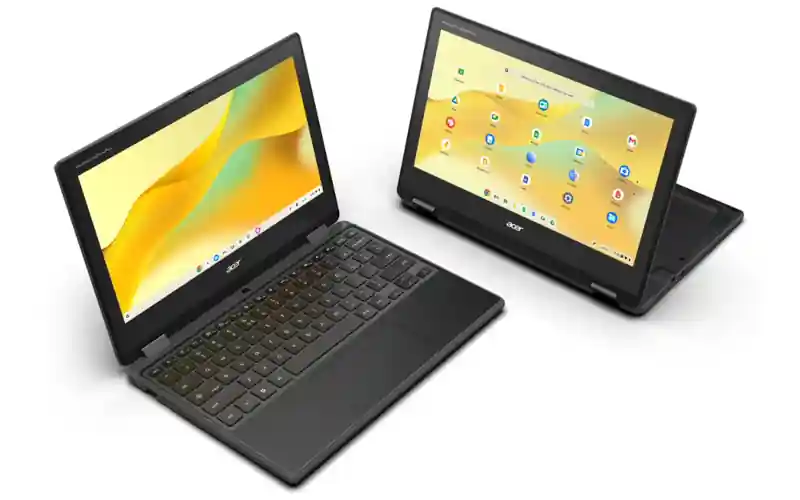
Acer has unveiled the Chromebook Spin 311 and Chromebook 311, its first student devices powered by the MediaTek Kompanio 540 processor. The company positions the models as tools that can support technology‑driven learning and help students develop essential digital skills. Both systems feature reinforced designs intended to withstand daily use in school environments and reduce long‑term ownership costs for districts. Acer executives highlighted durability, ease of use and manageability as key advantages for educators and IT teams.
The Kompanio 540 processor enables smooth performance for everyday tasks and more demanding applications such as STEM software and Minecraft Education Edition. Battery life reaches up to 15 hours, and fast‑charging support makes the devices suitable for one‑to‑one programs where students take them home. A fanless design keeps operation quiet, which can be beneficial in shared classroom settings. The Spin 311 offers a 360‑degree convertible hinge for tablet‑style use, while the standard 311 provides a lightweight clamshell option for younger learners.
Displays, Connectivity and Student‑Focused Features
Both Chromebooks include an 11.6‑inch HD IPS display, with the Spin 311 offering an optional Antimicrobial Corning Gorilla Glass panel. Schools can also choose TÜV Rheinland‑certified low blue‑light screens to reduce eye strain. A Full HD webcam with dual microphones supports class projects, and an optional world‑facing camera enables more interactive science or art activities. Connectivity options include Wi‑Fi 7 and Bluetooth 5.3, and a dedicated Quick Insert key provides one‑touch access to frequently used tools.
The new models meet MIL‑STD 810H standards and include impact‑resistant exteriors, shock‑absorbing bumpers and internal honeycomb structures to protect against drops up to 122 cm. Reinforced brackets around the display and ports help the devices withstand repeated handling. A spill‑resistant keyboard channels liquid away from internal components, and rubber feet improve grip for younger students. Modular components such as the keyboard and USB‑C port allow quick repairs, helping maximize device uptime and reduce maintenance expenses.
Sustainability and Fleet Management Enhancements
Acer incorporates PCR plastics, eco‑friendly packaging and energy‑efficient designs to support its sustainability goals. The devices are EPEAT registered and certified by Energy Star and TCO. Schools can pair the Chromebooks with Chrome Education Upgrade to streamline deployment, enhance security and simplify IT administration. Zero‑touch enrollment allows new units to be automatically provisioned when they connect to school networks.
The Acer Chromebook 311 (C725) will be available in North America in March 2026 starting at USD 499.99, in EMEA from EUR 329, and in Australia beginning the same month. The Chromebook Spin 311 (R725T) will launch in March 2026 as well, starting at USD 579.99 in North America and EUR 379 in EMEA, with availability also planned for Australia. Acer expects the models to appeal to districts seeking durable, easy‑to‑manage devices for K‑12 environments. Both systems expand the company’s education portfolio with new processor options and updated classroom‑ready features.
MediaTek’s Kompanio series has become increasingly common in education Chromebooks due to its balance of performance and power efficiency. Several earlier Kompanio‑based models have been adopted in large school deployments, particularly in regions prioritizing long battery life and low heat output. Industry analysts note that ARM‑based processors are gaining traction in the education market as schools look for quieter, cooler and more affordable devices.