

AI Begins to Reshape Religious Practice
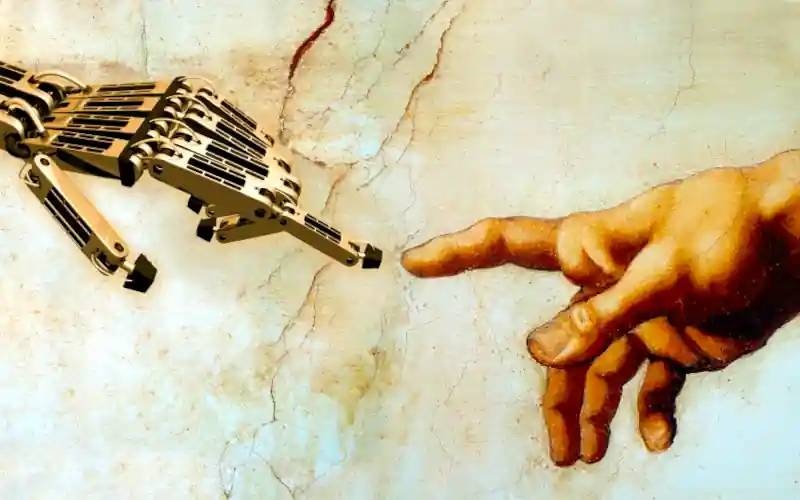
- Artificial intelligence is increasingly finding a place in religious life, from helping pastors prepare lessons to powering chatbots that simulate conversations with spiritual figures.
- Faith leaders and worshippers are experimenting with these tools in both personal and communal settings.
- The trend is raising enthusiasm, concern and debate about how technology should intersect with deeply human religious experiences.
AI Tools Enter the World of Worship
Artificial intelligence is beginning to influence how some religious communities study and share their faith. In 2024, Pastor Justin Lester of Friendship Baptist Church in California created a custom GPT trained on his sermons to help generate small‑group materials and support lesson planning. He views AI as a tool that can strengthen discipleship and community development. Lester believes that technological innovation can be part of spiritual growth, describing AI as one of the “greater things” believers can pursue.
AI’s presence in religious life is not limited to church leadership. Individuals are also turning to AI‑powered tools for personal reflection and guidance. Siraj Raval, an atheist who attends a Christian church, used an app called TalkToHim to simulate conversations with Jesus. He said the experience felt meaningful and offered answers to questions about guilt, forgiveness and moral behavior.
Experiments with AI are also appearing in physical places of worship. St. Peter’s Chapel in Switzerland installed an AI Jesus avatar in its confessional booth as part of an art project with a local university. Theologian Marco Schmid noted that visitors responded to the chatbot with surprising seriousness, even thanking it after their conversations.
Religious Leaders Voice Caution
Not all faith leaders are enthusiastic about AI’s expanding role. Rabbi Josh Fixler of Congregation Emanu El in Houston used ChatGPT to generate part of a sermon during the 2023 High Holidays. He later revealed the experiment to his congregation and expressed concerns about the technology’s reliability. One issue was that the chatbot fabricated a quote attributed to the medieval Jewish scholar Maimonides.
Scholars studying digital religion warn that AI systems can easily produce inaccurate or misleading information. Beth Singler of the University of Zurich pointed to an instance where a chatbot incorrectly claimed that Buddhism teaches five noble truths instead of four. She also raised ethical concerns about representing religious figures through AI, especially if the system generates harmful or inappropriate responses. Past incidents in which chatbots encouraged self‑harm highlight the risks of unregulated interactions.
Some religious traditions face additional challenges. Yaqub Chaudhary of the University of Cambridge questioned whether AI‑generated responses can convey authentic Islamic meaning. He noted that Islam considers the Quran the direct word of God, making it problematic for an AI model to generate religious guidance by blending information from its training data. Determining what is permissible or forbidden becomes difficult when the source is not authoritative.
Many leaders emphasize that religious practice is fundamentally relational. Steven Croft, the bishop of Oxford, argued that Christian community depends on in‑person, deeply human interaction. He believes that technology cannot replace the personal dimension at the heart of faith. Others share this view, stressing that AI should not overshadow the need for genuine human connection.
Technology’s Expanding Role in Faith Communities
Technology has long influenced religious practice, from televised sermons to livestreamed services during the COVID‑19 pandemic. Those tools primarily extended the reach of existing traditions. AI, however, is beginning to reshape how people interpret and experience their beliefs. It can generate sermons, answer theological questions and simulate spiritual conversations, offering new forms of engagement.
These developments raise questions about how religious communities will adapt. Some see AI as a valuable resource for education and outreach. Others worry that reliance on automated systems may dilute the depth and authenticity of spiritual life. The debate reflects broader concerns about how AI is transforming work, relationships and identity.
Despite the rapid adoption of AI tools, many leaders believe that technology cannot replace the core purpose of religion. Fixler argues that the goal is not to make machines more human but to help people become “the most human human.” His perspective highlights a tension between innovation and tradition that faith communities will continue to navigate.
As AI becomes more sophisticated, its role in religious contexts is likely to expand. The challenge will be balancing the benefits of new tools with the need for accuracy, ethics and human presence. Religious leaders and scholars expect ongoing discussion as communities explore how technology can support, rather than replace, spiritual life.
AI‑driven religious tools are part of a broader trend in which people use technology for emotional and existential support. Studies show that users often anthropomorphize chatbots, attributing empathy or wisdom to systems designed to generate text. This tendency raises important questions about trust, vulnerability and the boundaries between human and machine in spiritual settings.