

AI Fears Hit U.S. Software Stocks
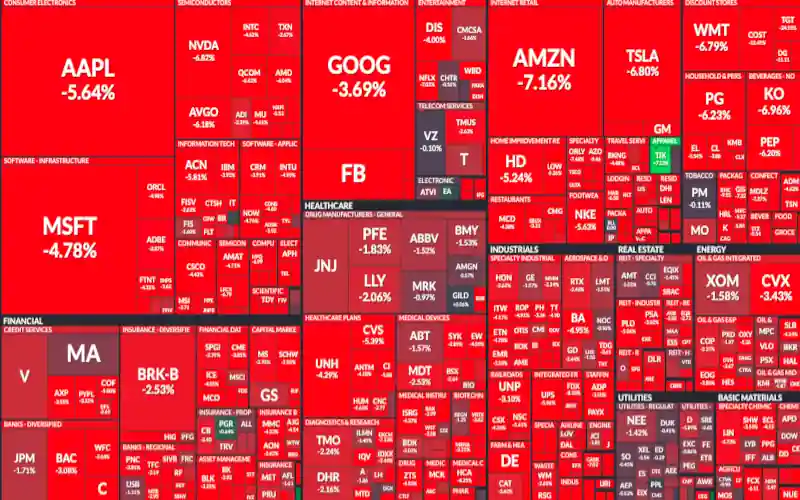
- U.S. software stocks fell sharply as weak forecasts from major vendors intensified concerns about AI‑driven disruption.
- Investors reacted to disappointing cloud projections and slowing growth across several large firms.
- The downturn reflects broader uncertainty about how traditional software models will adapt to rapid advances in artificial intelligence.
Market reaction to weak forecasts
U.S. software shares declined on Thursday after SAP’s cloud outlook and ServiceNow’s post‑earnings drop heightened worries about competitive pressure from AI‑focused companies. SAP’s stock fell more than 16 percent as analysts noted that its cloud backlog and 2026 revenue expectations missed projections. ServiceNow slid 11 percent despite issuing a subscription revenue forecast that exceeded Wall Street estimates. These developments added to a year‑long trend of double‑digit losses across the software sector.
Investors have grown increasingly concerned that AI tools capable of generating code and applications at lower cost could challenge subscription‑based SaaS providers. This shift has contributed to persistent weakness in software valuations. Analysts at J.P. Morgan described the situation as a cycle of depressed prices combined with rising expectations. Their assessment reflects a market struggling to reconcile long‑term demand with short‑term uncertainty.
The negative sentiment spread across major industry names. Salesforce shares dropped 7.1 percent, while Adobe declined 3.9 percent. Cloud security firm Datadog fell 8.3 percent as broader concerns weighed on the sector. These moves underscored how sensitive software stocks have become to signals of competitive pressure.
AI spending rises as cloud growth slows
Microsoft also drew attention after reporting record AI spending in the previous quarter. The company posted slower cloud‑computing growth, which contributed to a 12.1 percent decline in its share price. Investors interpreted the results as evidence of shifting priorities within the industry. The combination of rising investment and moderating cloud demand added to broader concerns about profitability.
Other enterprise software firms experienced similar declines. Atlassian fell 12.6 percent, while Zscaler lost 6.3 percent. Financial software provider Intuit shed 7.8 percent, and marketing platform HubSpot dropped 11.5 percent. These moves reinforced the perception that the sector is facing a challenging transition period.
Some analysts argue that the market is pricing in an overly pessimistic scenario. Adam Turnquist, chief technical strategist at LPL Financial, said investors appear to be assuming that AI could render traditional software models obsolete. His comments reflect a growing debate about how quickly AI‑driven automation will reshape the industry. The uncertainty has made software stocks among the weakest performers on the Nasdaq.
M&A activity and shifting industry winners
The S&P 500 Software and Services Index fell 8.7 percent, reaching a nine‑month low. Companies in the sector have increasingly turned to acquisitions to strengthen their AI capabilities. ServiceNow purchased cybersecurity startup Armis for $7.75 billion last year, while Salesforce acquired data‑management firm Informatica for $8 billion. These deals highlight efforts to adapt to a rapidly evolving competitive landscape.
While software firms have struggled, chipmakers and memory manufacturers have benefited from the surge in AI demand. The Philadelphia Semiconductor Index has risen sharply in January. Storage companies such as SanDisk and Western Digital have also posted strong gains. Their performance contrasts with the S&P 500 Software sector, which is down more than 13 percent.
The divergence reflects the hardware‑heavy nature of current AI investment. Companies building large‑scale AI systems require significant compute and storage capacity. This dynamic has shifted investor attention toward semiconductor and memory suppliers. The trend may continue as organizations expand their AI infrastructure.
AI‑related volatility has become a defining feature of technology markets over the past year. Research firms note that capital spending on AI infrastructure is growing faster than investment in traditional software tools. This imbalance has contributed to a rotation away from SaaS providers and toward hardware manufacturers. Analysts expect the divide to persist until the long‑term impact of AI on software business models becomes clearer.