Ancient Martian river system revealed by NASA rover
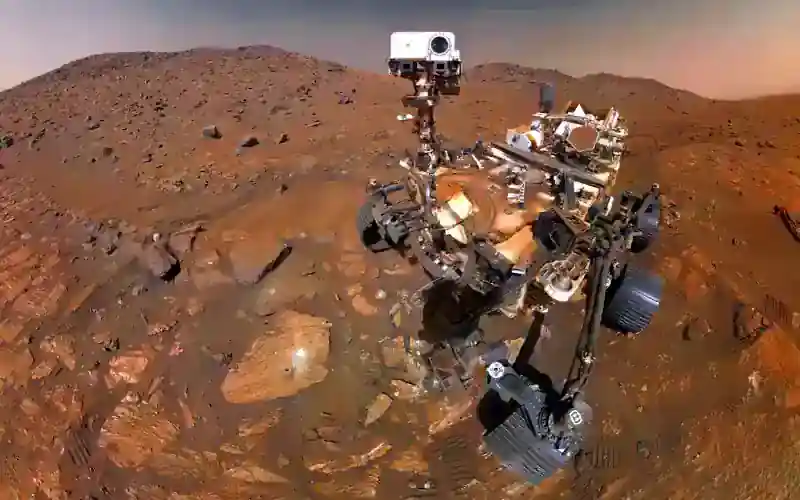
Perseverance Mars rover
- NASA’s Perseverance rover has identified one of the oldest known signs of flowing water beneath the surface of Mars.
- Ground‑penetrating radar data shows a buried river delta inside Jezero Crater, dating back billions of years.
- The findings strengthen the case that early Mars hosted environments capable of preserving traces of past life.
NASA’s Perseverance rover has uncovered compelling subsurface evidence of an ancient river system on Mars, offering a deeper look into the planet’s early, wetter history. Using ground‑penetrating radar, the rover detected geological structures up to 35 meters below the surface while traveling more than six kilometers across Jezero Crater. These newly mapped formations include layered sediments and eroded surfaces that strongly resemble a river delta, the type of feature formed where flowing water meets a larger body such as a lake. Researchers estimate that this buried delta dates back roughly 3.7 to 4.2 billion years, placing it among the earliest known water‑related formations on the planet.
The discovery adds to the growing body of evidence that Jezero Crater once hosted a substantial lake fed by active river channels. Scientists have long believed that water spilled over the crater’s rim, filling the basin and creating conditions favorable for sediment accumulation. Perseverance’s radar instrument, known as RIMFAX, provided the deepest subsurface data yet collected on Mars, enabling researchers to visualize the internal structure of the ancient deposits. These findings suggest that the newly identified delta predates the nearby Western Delta, a surface feature estimated to be slightly younger at 3.5 to 3.7 billion years old.
Radar mapping reveals hidden geological layers
RIMFAX works by sending radar pulses into the ground and measuring the signals that bounce back from buried materials. This technique allows scientists to build a three‑dimensional picture of the subsurface, revealing structures that are invisible from the surface. The data used in the new study was gathered between September 2023 and February 2024, spanning 250 Martian days of rover operations. By analyzing variations in the returned signals, researchers identified distinct sediment layers consistent with long‑term water activity.
These radar‑derived images show a complex arrangement of deposits shaped by flowing water, erosion and later burial. The presence of such well‑preserved structures indicates that the environment was once stable enough to support sustained river activity. Scientists view this as an important clue in reconstructing Mars’s early climate, which was warmer and wetter than the cold, thin‑atmosphered world seen today. The ability to map these features in detail marks a significant step forward in planetary geology, demonstrating the value of radar instruments for exploring other worlds.
Implications for ancient habitability
Water is considered essential for life as we know it, making these findings particularly relevant to the search for past Martian habitability. Jezero Crater has long been a prime target for this investigation because river deltas on Earth often trap and preserve organic material. The newly identified subsurface delta suggests that Jezero hosted a water‑rich environment even earlier than previously thought, potentially increasing the chances that biosignatures could have formed and survived there. Planetary scientist Emily Cardarelli, who led the study, noted that such environments are capable of preserving chemical or physical traces of life.
Perseverance has already collected rock samples from the crater that contain minerals hinting at possible biosignatures, though these minerals can also form through non‑biological processes. The samples date to roughly 3.2 to 3.8 billion years ago, overlapping with the estimated age of the buried delta. Scientists hope that future sample‑return missions will allow laboratory analysis on Earth, where more sensitive instruments could determine whether any of these materials truly indicate ancient microbial activity. Until then, each new geological discovery helps refine the picture of Mars’s early environment.
A broader picture of Mars’s watery past
The new findings fit into a larger pattern of discoveries pointing to widespread water activity on ancient Mars. Other rover missions have identified channels, lakebeds and sedimentary outcrops that formed in the presence of liquid water. China’s Zhurong rover, for example, detected radar signatures resembling ancient shorelines on the planet’s northern plains, suggesting that a vast ocean may once have existed there. These diverse observations indicate that Mars’s surface conditions varied significantly across regions and time periods.
Researchers emphasize that each rover mission contributes a new piece to the puzzle of Mars’s early evolution. Perseverance’s radar data adds a crucial subsurface perspective, revealing structures that erosion and time have hidden from view. As scientists continue to analyze the rover’s findings, they expect to uncover more details about how water shaped the planet’s landscape. The ongoing exploration of Jezero Crater will likely yield further insights into the environments that existed during Mars’s earliest chapters.
Ground‑penetrating radar has become an increasingly important tool in planetary exploration, and its success on Mars may influence future mission designs. Instruments similar to RIMFAX could one day be used on the Moon, icy moons like Europa, or even asteroids to study hidden layers and search for signs of past geological or biological activity.