
Chemputation Aims to Digitize Modern Chemistry
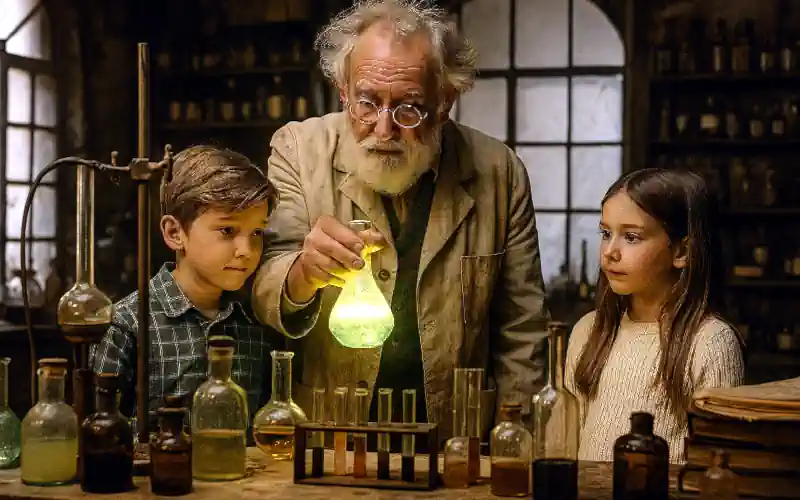
- Chemistry underpins the development of medicines, materials and energy technologies, yet much of the field still relies on manual, inconsistent laboratory practices.
- Researchers argue that without a programmable, machine‑readable approach to molecule creation, AI‑driven discovery will remain limited.
- A proposed framework called “chemputation” seeks to bring chemistry into the digital era through automation, standardization and executable chemical code.
A Manual Discipline in a Digital Age
Chemistry remains surprisingly artisanal despite its reputation as a highly advanced science. New molecules are often treated as bespoke projects, with syntheses that work in one laboratory failing in another due to missing context or undocumented adjustments. Published reaction pathways typically appear as static text, lacking the timing, error correction and environmental details that made them successful. This disconnect slows discovery and makes scaling new substances difficult.
Historically, chemistry evolved from alchemy, where practitioners relied on intuition and hands‑on experimentation. Modern chemists have far more analytical tools, yet the core workflow still depends on humans translating conceptual designs into step‑by‑step laboratory procedures. AI systems can now propose millions of candidate molecules and reaction routes, but many of these suggestions are impossible to synthesize. The absence of a digital framework for real‑world chemical rules limits the usefulness of these computational tools.
Researchers argue that chemistry cannot become fully digital unless it becomes programmable. A machine‑readable language would need to encode instructions, conditionals, loops and error handling for assembling molecules. Such a system would allow chemical processes to be executed consistently across different hardware and laboratories. Without this capability, AI‑generated molecules risk remaining theoretical rather than practical.
The concept of a “chemputer” aims to address this gap by treating chemistry as a form of computation. Instead of prose‑based descriptions, chemical procedures would be published as executable code. Reagents become data, and operations such as mixing, heating and purification function as instructions. Machines would act as processors, enabling chemistry to run like software.
Building a Programmable Framework for Matter
The idea of chemputation emerged in 2012 from researchers at the University of Glasgow. They developed an abstraction for chemical code using operations such as adding or subtracting matter and energy. Translating these steps into binary allowed them to build the foundational components of a chemputer. This approach mirrors the evolution of computing, which shifted from manual calculation to programmable systems after Alan Turing’s theoretical breakthroughs.
Chemistry has not yet made a similar leap. Laboratories around the world still rely on individualized methods, much like chefs perfecting their own recipes. Automation exists, but it often supports isolated tasks rather than enabling fully programmable workflows. As a result, the bottleneck in molecular discovery has shifted from design to synthesis.
A programmable language for matter would allow researchers to encode real‑world constraints directly into chemical instructions. This would prevent AI systems from proposing molecules that cannot be made. It would also enable reproducibility, since processes would no longer depend on human interpretation. Feedback loops with real‑time sensors could further improve accuracy and reliability.
The shift to executable chemistry would transform how discoveries are shared. Instead of re‑imagining a synthesis from text, laboratories could run the same code and obtain identical results. This standardization could accelerate drug development, materials science and energy research. It would also reduce the fragility of current workflows, where small procedural differences can derail entire experiments.
Self‑Driving Labs and the Future of Chemical Discovery
Chemputation took a significant step forward in 2025 with the launch of the world’s first “chemifarm” by Chemify, a University of Glasgow spin‑out. The facility applies chemputation to produce new molecules for drug and materials discovery. AI and robotics allow the system to self‑learn, improving its ability to synthesize increasingly complex compounds. Discovery becomes iterative and programmable rather than dependent on trial‑and‑error.
This development aligns with the rise of “self‑driving laboratories,” which use automation and AI to accelerate research. These labs can explore chemical space more efficiently than traditional methods. They also reduce the need for manual intervention, freeing scientists to focus on higher‑level problem‑solving. The combination of chemputation and robotics could reshape the pace of scientific innovation.
Chemistry’s origins in alchemy highlight how far the field has come, yet its manual roots remain evident. Many laboratory practices still rely on tacit knowledge and individual expertise. Completing the transition to digital chemistry will require new tools, standards and infrastructure. Researchers argue that this shift is essential for keeping pace with advances in AI.
The long‑term vision is a fully programmable chemical ecosystem. Such a system would enable consistent synthesis, automated optimization and rapid scaling of new molecules. Achieving this will require continued investment in chemputation technologies and collaborative efforts across disciplines. The digital transformation of chemistry is still in its early stages but gaining momentum.
Some researchers believe that chemputation could eventually enable “cloud chemistry,” where laboratories remotely execute chemical code on shared robotic platforms. This model would allow scientists to run experiments without owning specialized equipment, similar to how cloud computing transformed software development. If realized, it could democratize access to advanced chemical synthesis and accelerate global research collaboration.