
China’s Secret EUV Project Revealed
- China has built a prototype extreme‑ultraviolet lithography machine, a technology the West has long sought to keep out of Beijing’s reach.
- The project, developed in secrecy by former ASML engineers and state‑linked institutions, suggests China is closer to semiconductor independence than previously believed.
- Major technical hurdles remain, yet the effort marks a significant shift in the global chip landscape.
A Prototype Built in Secrecy
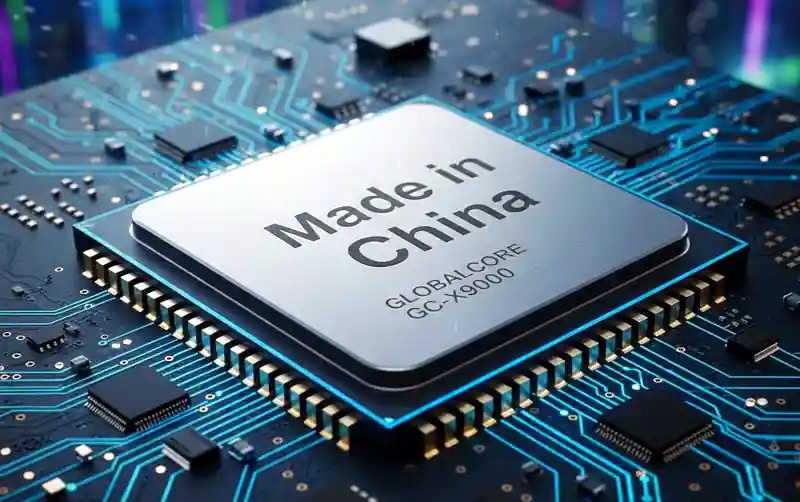
Chinese researchers in a high‑security Shenzhen facility have constructed a working prototype of an EUV lithography machine, Reuters has learned. The system, completed in early 2025, occupies nearly an entire factory floor and was reverse‑engineered by former ASML engineers. EUV machines are essential for producing the most advanced chips, and until now only ASML has mastered the technology. China’s prototype can generate extreme‑ultraviolet light but has not yet produced functional chips.
ASML’s CEO said earlier this year that China would need “many, many years” to reach this level. The existence of the prototype indicates that Beijing may be several years ahead of analysts’ expectations. China still faces major challenges, particularly in replicating precision optics supplied by Western firms. Even so, the government aims to produce working chips on the machine by 2028, though insiders say 2030 is more realistic.
Recruitment, Espionage Concerns and Supply Chains
The project is part of a six‑year national initiative overseen by senior Chinese leadership. Huawei coordinates a network of companies and research institutes, involving thousands of engineers across the country. Former ASML staff, many recently retired and Chinese‑born, were recruited with large bonuses and in some cases given false identities to maintain secrecy. European intelligence agencies have warned that China uses extensive recruitment and espionage programs to obtain advanced technology.
China has struggled to acquire high‑precision optical components from suppliers such as Germany’s Zeiss. To compensate, teams have salvaged parts from older ASML machines and sourced components through secondary markets. Some export‑restricted items from Japan’s Nikon and Canon have also been used, according to sources familiar with the effort. A group of around 100 recent graduates is dedicated to reverse‑engineering both EUV and DUV components, with their work monitored by individual cameras.
Technical Progress and Remaining Obstacles
China’s prototype is significantly larger and less refined than ASML’s commercial systems. Researchers have made progress integrating EUV light into the optical system, thanks to breakthroughs at institutes such as CIOMP. The machine still requires substantial refinement, particularly in optics and contamination control. Analysts say China benefits from the fact that commercial EUV technology already exists, reducing the need to invent every component from scratch.
Huawei plays a central role across the semiconductor supply chain, from chip design to equipment integration. Employees assigned to sensitive projects often sleep on‑site and work in isolated teams to maintain confidentiality. The company has been under U.S. export restrictions since 2019, limiting access to advanced chips and manufacturing tools. Despite these constraints, Huawei continues to coordinate national efforts to reduce reliance on foreign technology.
EUV lithography is considered one of the most complex engineering achievements in modern manufacturing. ASML’s systems require thousands of components, including mirrors polished to atomic‑level precision and light sources that generate plasma hotter than the surface of the sun. China’s attempt to replicate this technology underscores the strategic importance of chipmaking in global geopolitics. If Beijing succeeds, it could reshape the balance of power in the semiconductor industry for decades.