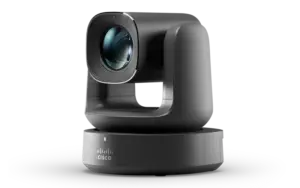

Cisco Unveils Smart PTZ Camera for Modern Meeting Spaces
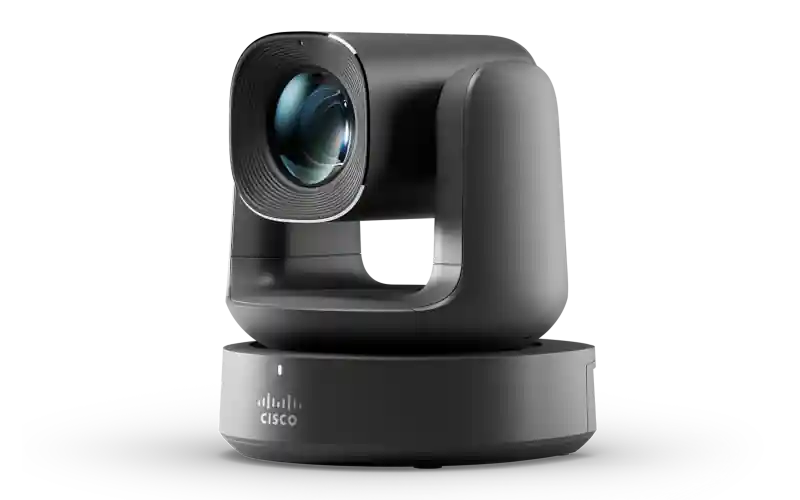
Cisco Vision PTZ
- Cisco has introduced the Vision PTZ camera, a new IP‑based device designed to enhance video conferencing environments.
- The system uses built‑in automation and AI‑driven tracking to improve how presenters and participants appear on screen.
- Its design focuses on flexibility, simplified installation, and integration with existing Cisco collaboration tools.
AI‑Enhanced Tracking for Presenters
Cisco’s Vision PTZ camera arrives as an expansion of the company’s existing portfolio of IP‑based peripherals. The device is built to support modern meeting rooms and lecture spaces where clear visual communication is essential. Its integrated AI system identifies the active presenter and keeps them in frame through the Presenter Tracking feature. Motorized pan, tilt, and zoom capabilities paired with 4K optics help maintain a natural and detailed image of the speaker.
The camera aims to provide remote participants with a more immersive experience by automatically adjusting to movement. Its tracking system reduces the need for manual camera control, which can be disruptive during live sessions. Cisco positions the device as a tool that brings consistency to hybrid meetings by ensuring the speaker remains visible at all times. The result is a more predictable and stable visual experience for both local and remote audiences.
Multiple Angles Through Coordinated Camera Systems
The Vision PTZ camera can be mounted on walls or ceilings, allowing it to adapt to a wide range of room layouts. When multiple units are connected to a compatible Cisco video conferencing system, they can work together to deliver coordinated views. Cross View technology and advanced speaker‑tracking algorithms help the cameras identify who is speaking and switch to the most suitable angle. This approach improves room coverage and ensures that facial expressions and reactions remain visible.
Motorized movement enables the system to adjust dynamically as participants shift positions. The coordinated setup is intended to reduce blind spots and maintain continuity during discussions. Cisco highlights that the system can scale across different room sizes without requiring complex configuration. The goal is to create a unified viewing experience that feels consistent regardless of the number of cameras in use.
Simplified Installation Through Video‑over‑IP
The camera’s video‑over‑IP architecture is designed to reduce installation complexity. A single Ethernet cable provides power, control, and video transmission, eliminating the need for separate power supplies or signal cables. Cisco’s video conferencing codecs include PoE‑enabled switch ports, allowing the system to operate in a plug‑and‑play manner. Remote management through cloud tools further simplifies updates and ongoing maintenance.
Fewer cables also allow more flexibility in placement, whether the camera is mounted on a wall, ceiling, or stand. The streamlined setup is intended to reduce deployment time and minimize the need for additional hardware. Administrators can manage multiple cameras centrally, which helps maintain consistency across distributed meeting spaces. This approach supports organizations that are standardizing on IP‑based collaboration infrastructure.
PTZ (pan‑tilt‑zoom) cameras have become increasingly common in hybrid work environments, and many manufacturers are shifting toward IP‑based designs. These systems often integrate AI‑driven tracking similar to the Vision PTZ’s capabilities, reflecting a broader industry trend toward automation in meeting technology. Presenter‑tracking algorithms originally emerged in lecture‑capture systems used in universities, and they have since evolved into more advanced real‑time solutions for enterprise collaboration. Cisco’s adoption of these features aligns with a growing demand for tools that reduce manual intervention and support more natural communication in remote and hybrid settings.