

Ethernet Switch Market Set for Steady Growth
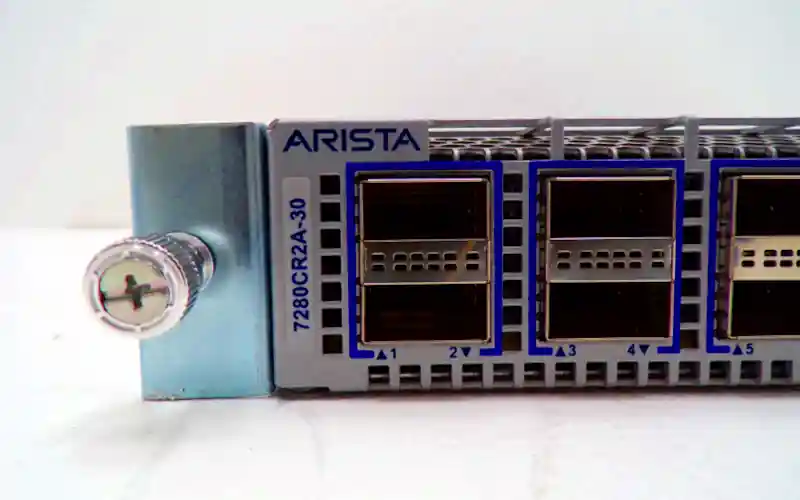
- A new industry report forecasts strong expansion in the global Ethernet switch market as cloud computing, data centers and high‑speed networking continue to scale.
- Demand for faster connections, smarter infrastructure and next‑generation standards is reshaping the competitive landscape.
- Related switch markets are also growing, reflecting broader momentum across networking hardware.
Rising Demand for High‑Speed Networking
Mordor Intelligence’s latest report places the Ethernet switch market at USD 37.25 billion in 2025, with projections reaching USD 54.96 billion by 2030. Growth is driven by hyperscale data center investments, rapid cloud adoption and the need for low‑latency enterprise networks. Expanding IoT deployments and ongoing 5G rollouts are further increasing traffic loads across global infrastructure. The shift toward software‑defined networking is also accelerating upgrades as organizations modernize their architectures.
Network operators are moving quickly toward higher‑speed Ethernet standards. Cloud providers are upgrading to support AI‑driven workloads that require significantly more bandwidth. Enterprises are adopting faster connections that improve performance without requiring major cabling overhauls. Standardization efforts continue to enhance reliability and traffic management, making next‑generation Ethernet more practical for widespread deployment.
Power over Ethernet (PoE) is becoming a key driver of switch adoption. Organizations are increasingly using PoE to power smart lighting, security cameras and environmental sensors. Advances in PoE chipsets now support higher power levels, enabling more device types to run on a single cable. These improvements reduce installation complexity and simplify network management.
The report highlights how PoE is expanding across commercial, industrial and healthcare environments. Smart buildings rely heavily on PoE‑enabled devices to streamline operations. Industrial automation systems also benefit from simplified wiring and centralized power control. These trends are expected to continue as connected infrastructure becomes more common.
Regional Trends Shape Market Expansion
North America remains a major market for Ethernet switches due to large‑scale cloud deployments and broadband initiatives. Enterprises and service providers are upgrading networks to meet rising performance expectations. Energy‑efficient solutions and next‑generation silicon are gaining traction as organizations seek to reduce operational costs. These factors contribute to sustained demand for advanced switching hardware.
Asia‑Pacific continues to lead global market growth. Strong manufacturing hubs and supportive government policies are driving adoption across China, India and Japan. Investments in smart infrastructure, AI and 5G are fueling demand for high‑performance networking equipment. Local initiatives favoring domestic brands are also influencing purchasing patterns.
Europe is experiencing steady growth as digital transformation accelerates across industries. Enterprises are modernizing networks to support cloud migration and industrial automation. Regulatory focus on energy efficiency is shaping product selection. These dynamics contribute to ongoing upgrades across the region.
The report also profiles major industry players. Companies such as Cisco, Huawei, Arista Networks, HPE, Juniper and Dell remain central to the competitive landscape. Additional vendors, including Extreme Networks, Netgear, TP‑Link and Zyxel, serve diverse market segments. Their combined portfolios reflect the broad range of applications driving Ethernet switch adoption.
Related Switch Markets Show Parallel Growth
Several adjacent switch markets are expanding alongside Ethernet switching. The micro switch market is projected to grow from USD 0.79 billion in 2025 to USD 1.04 billion by 2030. Increased use in automotive systems, industrial automation and consumer electronics is driving demand for compact and reliable components. These switches play a critical role in precision control applications.
The electromechanical microwave switch market is also gaining momentum. Valued at USD 1.19 billion in 2025, it is expected to reach USD 1.71 billion by 2030. Growth is supported by adoption in aerospace, defense, telecommunications and satellite communication. Infrastructure development for 5G and radar systems is further boosting demand.
Emergency stop switches represent another expanding segment. The market is forecast to grow from USD 10.17 billion in 2025 to USD 16.83 billion by 2030. Strict industrial safety regulations and increased automation are driving adoption across manufacturing and logistics. These switches remain essential for protecting both operators and equipment.
Together, these related markets illustrate the broader momentum in switching technologies. Rising automation, digitalization and connectivity are creating sustained demand across multiple hardware categories. Each segment contributes to the overall evolution of global networking infrastructure. Their combined growth reflects the increasing complexity of modern digital systems.
Ethernet technology has evolved dramatically since its introduction in the 1970s, when speeds were limited to 2.94 Mbps. Today’s highest‑end Ethernet standards exceed 800 Gbps, representing an increase of more than 270,000 times. This rapid progression has been driven largely by data center requirements and cloud computing. The pace of innovation suggests that even faster standards may emerge as AI workloads continue to scale.