
Intel’s New Core Ultra 200S Plus CPUs Debut With Higher Core Counts
Intel Core Ultra 200S Plus
- Intel has introduced the Core Ultra 200S Plus desktop processors, adding higher core counts, faster die‑to‑die communication and new optimization tools.
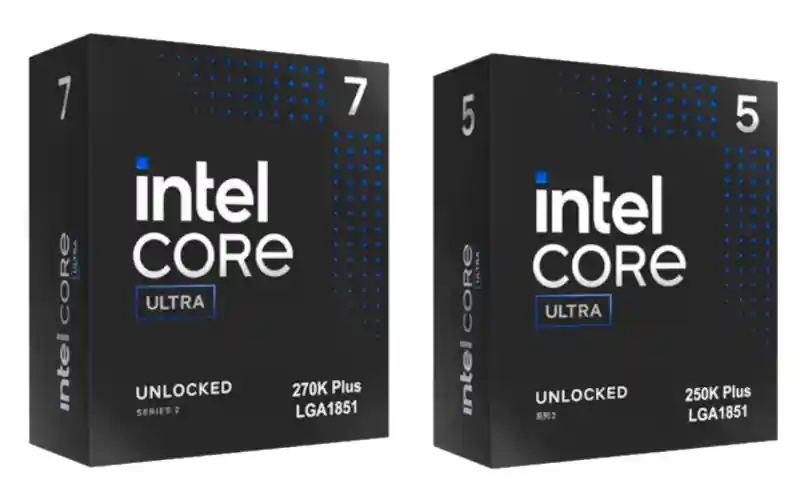
- The lineup includes the Core Ultra 7 270K Plus and Core Ultra 5 250K/KF Plus, both aimed at improving gaming and multithreaded workloads.
- Intel is also expanding memory support and maintaining compatibility with existing 800‑series motherboards.
The Core Ultra 200S Plus series marks Intel’s latest update to its desktop processor family, bringing architectural refinements and expanded capabilities for performance‑focused users. While the company highlights notable gains in gaming and content creation workloads, the new chips primarily stand out for their increased core counts and improved internal communication speeds. Intel is positioning the lineup as a meaningful step forward for enthusiasts who want more headroom without changing their existing platform. The processors will be available starting March 26, 2026.
More Cores and Faster Interconnects
Intel’s two new desktop models—the Core Ultra 7 270K Plus and Core Ultra 5 250K/KF Plus—feature additional efficiency cores compared to their predecessors. The 270K Plus now includes 24 cores (8 performance cores and 16 efficiency cores), while the 250K Plus offers 18 cores (6 performance and 12 efficiency). These increases are designed to improve multithreaded workloads such as rendering, encoding and complex multitasking scenarios. Intel also reports a die‑to‑die frequency boost of up to 900 MHz, which enhances communication between the CPU and memory controller.
This higher interconnect speed is intended to reduce system latency, which can benefit gaming performance and responsiveness in general desktop use. Intel claims up to a 15% average gaming uplift compared to its existing Core Ultra Series 2 processors. The company also cites significant multithreaded gains over competing CPUs in similar price segments, though real‑world results will depend on software optimization and system configuration. The improvements reflect Intel’s ongoing effort to refine hybrid architectures and extract more performance from its desktop platform.
New Optimization Tool for Games
A notable addition to the 200S Plus series is the Intel Binary Optimization Tool, which introduces a new approach to performance tuning. Instead of relying solely on game‑specific patches or compiler‑level optimizations, this tool acts as a binary translation layer that can enhance instructions per cycle (IPC) in select titles. Intel describes it as a way to improve performance even when software was originally optimized for other x86 processors, older Intel architectures or game consoles.
The tool builds on Intel’s long history of workload optimization and is presented as part of a broader roadmap for improving enthusiast‑class performance. While Intel has not detailed the full list of supported games, the technology suggests a shift toward more flexible, software‑driven tuning. It may also help extend the useful lifespan of the platform by improving compatibility and performance across a wider range of workloads. As with any new optimization layer, adoption and long‑term support will determine its practical impact.
Expanded Memory Support and Platform Compatibility
Memory support receives a notable upgrade in the new lineup. The Core Ultra 200S Plus processors support DDR5 memory speeds up to 7200 MT/s, an increase from the 6400 MT/s limit on the non‑Plus 200S models. Enthusiasts who rely on overclocked memory kits may also benefit from compatibility with Intel’s Boost BIOS profile, which includes warranty‑backed support for memory speeds up to 8000 MT/s. This continues Intel’s trend of pushing memory controller capabilities to appeal to high‑performance PC builders.
Another forward‑looking feature is early support for 4‑Rank CUDIMM memory modules. These modules can offer up to 128 GB per stick, combining workstation‑class capacity with gaming‑oriented latency and bandwidth characteristics. Support will depend on specific motherboard models within the Intel 800‑series chipset family, but the option may appeal to users who need large memory pools for tasks such as virtual machines, scientific workloads or high‑resolution content creation. Importantly, the new processors remain compatible with all existing 800‑series motherboards, ensuring an upgrade path without requiring a new platform.
Availability and Pricing
Intel plans to release the Core Ultra 7 270K Plus and Core Ultra 5 250K Plus through retail partners on March 26, 2026. Suggested pricing starts at $299 for the 270K Plus and $199 for the 250K Plus, placing them in competitive mid‑range and upper‑mid‑range segments. System integrators and OEMs will also begin offering prebuilt systems featuring the new processors at launch. Users interested in the 4‑Rank CUDIMM support or other advanced features may want to check motherboard compatibility details as new models roll out through 2026.
Intel’s introduction of a binary optimization layer echoes earlier industry efforts such as GPU shader translation and dynamic recompilation used in console emulation. While the company is applying the concept to native PC gaming rather than emulation, the approach suggests a broader trend toward software‑assisted performance tuning. If widely adopted, this could influence how future processors handle compatibility and optimization across diverse hardware generations.