

Memory Chip Market Set for Strong Growth by 2033
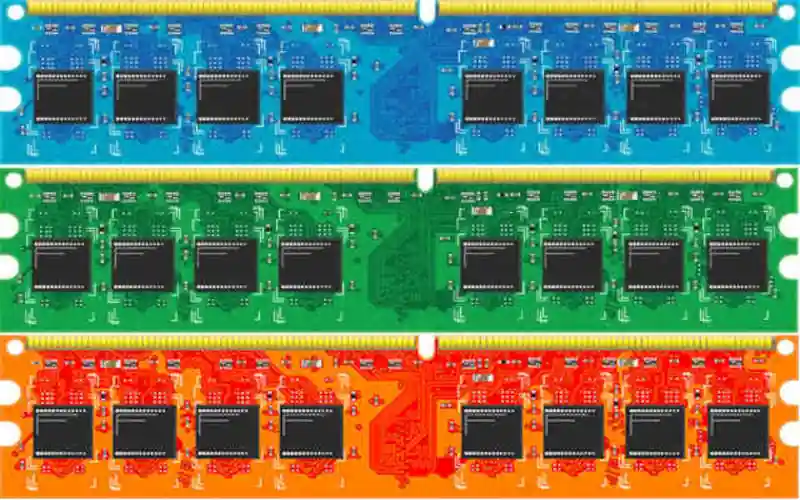
- The global memory chip market is projected to nearly double in value by 2033 as demand accelerates across AI, cloud computing, 5G and consumer electronics.
- Advancements in high‑bandwidth memory, 3D stacking and emerging non‑volatile technologies are reshaping the competitive landscape.
- Major semiconductor manufacturers continue to expand capacity, pursue acquisitions and develop next‑generation architectures to meet rising global requirements.
Rising Demand Across AI, Cloud and Consumer Devices
The global memory chip market reached US$168.45 billion in 2024 and is expected to grow to US$302.90 billion by 2033. This expansion reflects a compound annual growth rate of 6.7% driven by increasing data storage needs and high‑speed memory requirements across multiple sectors. DRAM, NAND flash, NOR flash and emerging technologies such as MRAM and ReRAM remain essential components in smartphones, data centers, electric vehicles and industrial systems. Continuous improvements in memory density, power efficiency and semiconductor manufacturing processes are accelerating adoption.
Growing investments in data centers and AI workloads are contributing significantly to long‑term market momentum. High‑bandwidth memory (HBM) and advanced DRAM solutions are in strong demand as AI accelerators and GPUs require faster and more efficient memory subsystems. Consumer electronics manufacturers are also integrating LPDDR and UFS memory into next‑generation devices to improve performance and user experience. These trends highlight the expanding role of memory technologies in modern computing environments.
Industry developments throughout 2025 underscore the pace of innovation. Semiconductor manufacturers announced mass production of advanced memory chips using cutting‑edge process nodes and 3D stacking techniques. NAND flash producers scaled capacity to support SSD demand in cloud infrastructure and enterprise storage. Research into emerging non‑volatile memory technologies continues to gain traction as potential successors for select computing and IoT applications.
Standardization efforts are also shaping the market. Global chip ecosystem initiatives are advancing memory interface designs optimized for heterogeneous computing architectures. These efforts aim to improve compatibility across edge devices, AI accelerators and high‑performance computing systems. The result is a more unified and scalable memory ecosystem capable of supporting diverse workloads. Such developments are expected to influence future product roadmaps across the industry.
Industry Consolidation and Competitive Positioning
Mergers and acquisitions remain a key feature of the memory chip landscape. In November 2025, a leading memory manufacturer acquired a specialist in high‑speed interface IP to strengthen its next‑generation DRAM portfolio. Another major semiconductor firm partnered with a memory technology startup to co‑develop advanced 3D NAND and embedded memory architectures. A technology investor group also acquired assets from a non‑volatile memory developer to expand into emerging markets beyond traditional NAND and DRAM.
The competitive environment is dominated by several major players. Samsung Electronics holds a 32.8% share, supported by leadership in semiconductor manufacturing and strong demand across consumer electronics and data centers. SK hynix follows with 21.4%, driven by its DRAM and NAND expertise and deep relationships with global OEMs. Micron Technology maintains an 18.1% share through advanced memory solutions and significant R&D investments. Kioxia and Western Digital continue to play important roles in NAND flash innovation and enterprise storage.
Other companies contribute to the broader ecosystem. Qualcomm, Broadcom, Texas Instruments and Renesas Electronics support memory‑intensive applications through semiconductor IP, connectivity solutions and embedded processing. HP Inc. participates through system‑level integration and enterprise hardware offerings. These organizations collectively shape the global memory supply chain and influence technology adoption across multiple industries.
Market drivers remain diverse and interconnected. Rapid data generation across enterprise, cloud, IoT and mobile ecosystems is increasing demand for high‑performance memory. Advancements in AI, machine learning and real‑time analytics require low‑latency, high‑bandwidth solutions. Consumer interest in gaming, AR/VR and high‑resolution video continues to push memory performance requirements. Autonomous systems and ADAS technologies further expand the need for reliable and robust memory architectures.
Government initiatives are also influencing market growth. Investments in semiconductor fabrication capacity aim to strengthen local supply chains and reduce import dependence. These policies support the expansion of memory production facilities in key regions. As global demand rises, such initiatives are expected to play a critical role in ensuring supply stability. The combination of public and private investment is shaping the future of the memory chip industry.
Regional Trends and Application Expansion
Regional insights reveal distinct growth patterns across global markets. Asia‑Pacific holds a 38% share, supported by major manufacturing hubs, strong consumer electronics adoption and significant fabrication investments. North America follows with 35%, driven by a robust semiconductor ecosystem and high demand from cloud service providers. Europe accounts for 20%, supported by industrial digitization, automotive memory requirements and government backing for semiconductor manufacturing.
Latin America and the Middle East & Africa represent smaller but growing segments. These regions are experiencing increased digital transformation and rising demand for consumer and enterprise memory solutions. Expanding IT infrastructure investments are contributing to gradual market development. As technology adoption accelerates, these regions are expected to play a larger role in global memory consumption.
Memory types show varied adoption patterns. Volatile memory remains essential for high‑speed data access in computers, smartphones and cameras. Non‑volatile memory continues to grow due to its ability to retain data without power and its expanding use in mobile devices and consumer electronics. Emerging memory technologies such as MRAM and ReRAM are gaining attention for future high‑performance and low‑power applications. These innovations may reshape the market over the next decade.
Application segments also demonstrate strong diversity. Laptop and PC applications maintain a major share due to ongoing demand for computing devices across work, education and gaming. Smartphones represent a significant segment as storage and performance requirements increase. Camera applications contribute steadily through digital and security camera adoption. Tablets, wearables and IoT devices further support market expansion through new use cases and device proliferation.
High‑bandwidth memory (HBM) has become one of the fastest‑growing segments in the memory industry due to its critical role in AI accelerators and GPU‑based computing. HBM stacks multiple memory dies vertically using through‑silicon vias, enabling dramatically higher bandwidth than traditional DRAM. This architecture is now central to training large AI models and powering advanced data center workloads. Analysts expect HBM demand to remain strong as AI systems continue to scale in complexity and computational intensity.