

Mystery of the Burtele Foot Resolved
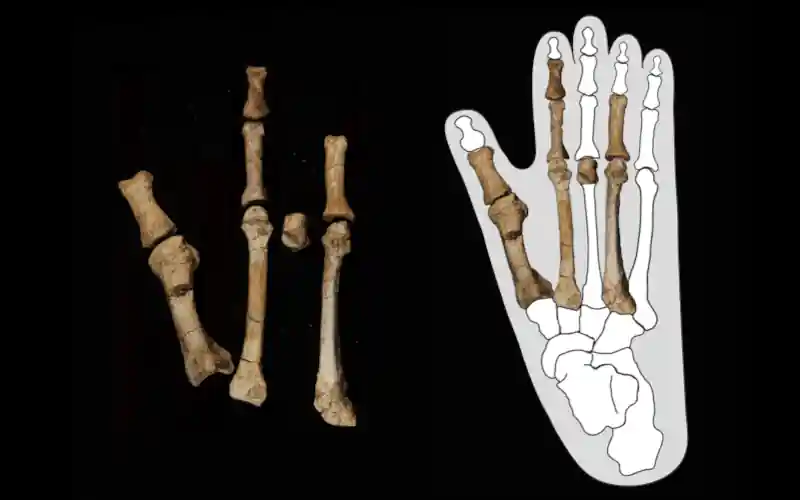
- Foot fossils belong to species Australopithecus deyiremeda
- The Ethiopian fossils are 3.4 million years old
- Study shows two human ancestors co-existed at the time
Researchers have clarified the origins of the 3.4 million-year-old fossils known as the “Burtele Foot,” first unearthed in Ethiopia in 2009. The bones have now been attributed to Australopithecus deyiremeda, a species combining both ape-like and human-like traits. This conclusion was supported by the nearby discovery of 25 teeth and a jawbone belonging to a young child. The findings shed light on a poorly understood period in human evolution when multiple hominin species lived side by side.
Walking Upright, Yet Climbing Trees
The Burtele Foot fossils revealed that Australopithecus deyiremeda was capable of bipedal walking but retained an opposable big toe. Such a feature would have been advantageous for climbing trees, suggesting a different walking style compared to modern humans. Evidence indicates that this species pushed off from its second toe rather than the big toe when moving on the ground. This adaptation may have been less efficient for walking but beneficial in environments with predators such as saber-toothed cats and hyenas.
Australopithecus deyiremeda lived alongside Australopithecus afarensis, the species that includes the famous fossil Lucy. Their coexistence raises questions about how closely related species shared resources or avoided competition. Analysis shows they walked differently and consumed distinct plant-based diets, pointing to ecological separation. Paleoanthropologist Yohannes Haile-Selassie emphasized that these discoveries confirm early human evolution was not linear, with multiple species existing simultaneously.
Diets and Evolutionary Strategies
Chemical studies of tooth enamel revealed that Australopithecus deyiremeda relied mainly on foods from trees and shrubs. In contrast, Australopithecus afarensis had a broader diet, including grasses, fruits, and nuts, which may have provided a survival advantage. Differences in foot anatomy and diet suggest varied strategies for adapting to their environment. University of Michigan geochemist Naomi Levin noted that linking locomotion styles with dietary habits helps explain how these species evolved and interacted.
An interesting detail is that Australopithecus deyiremeda was only formally identified in 2015, making it a relatively recent addition to the human family tree. Its name means “close relative” in the local Afar language, reflecting its evolutionary proximity to other hominins. The Burtele Foot discovery strengthens the case that early human ancestors experimented with multiple forms of bipedality before modern walking patterns emerged. This highlights the complexity of human evolution, where different adaptations coexisted and shaped the path toward Homo sapiens.