
New Study Reassesses Chile’s Monte Verde Site
Monte Verde
- A new analysis challenges long‑held assumptions about the age of Chile’s Monte Verde archaeological site.
- Researchers now argue the site is far younger than previously believed, placing it within the Holocene.
- The findings have sparked debate among archaeologists who question the study’s methods and conclusions.
Re‑evaluating a Landmark Discovery
A recent study has reopened debate over the age of the Monte Verde archaeological site in southern Chile, long considered one of the most important early human settlements in the Americas. Earlier research placed the site at roughly 14,500 years old, positioning it as key evidence for a pre‑Clovis human presence. New testing, however, suggests the site dates to between 4,200 and 8,200 years ago, a range that would remove Monte Verde from discussions about the earliest migrations into the Western Hemisphere. The findings were published in the journal Science by a team led by University of Wyoming archaeologist Todd Surovell.
Researchers used three dating methods on materials collected from the site and surrounding landforms. Samples included wood, creek‑deposited sand and a layer of volcanic ash, all of which were analyzed within their geological context. According to Surovell, the consistency of dates across upstream and downstream locations indicated that earlier age estimates were incorrect. The team argues that previous investigators misinterpreted older material that had been naturally redeposited by the shifting creek.
Testing from 1997 had concluded that Monte Verde was 14,500 years old, making it significantly older than the earliest known Clovis sites in North America. Those Clovis sites, dated to around 12,800 years ago, were long considered the first evidence of human presence south of the continental ice sheets. Because Monte Verde appeared to predate them by more than a millennium, it played a central role in overturning the “Clovis First” paradigm. The new study challenges that narrative by placing Monte Verde well after the Clovis period.
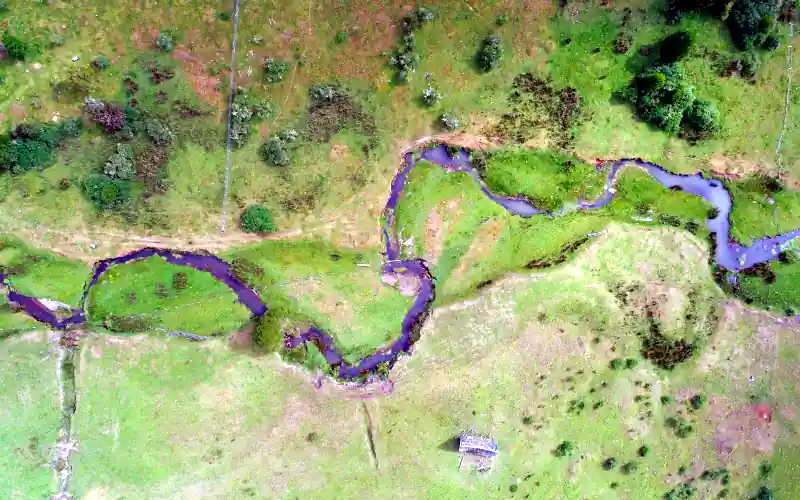
Surovell’s team argues that the earlier radiocarbon dating relied on wood that was indeed ancient but unrelated to human occupation. They suggest that the wood had been mixed into younger layers through natural erosion processes. As the creek meandered through the valley, older material from the banks could have been transported and redeposited, creating a misleading association with human activity. This reinterpretation forms the basis of the study’s revised timeline.
Scientific Pushback and Methodological Disputes
The new findings have been met with strong criticism from researchers who have studied Monte Verde for decades. Vanderbilt University anthropologist Tom Dillehay, who led much of the original excavation work, disputes the study’s conclusions and argues that it overlooks extensive cultural evidence. He points to stone tools, wooden and bone artifacts, plant remains, hearths, animal materials and even human footprints as indicators of a well‑documented early occupation. These elements, he says, form a coherent archaeological context that cannot be dismissed.
Dillehay contends that the new study contains methodological and empirical errors. He argues that its interpretation of the wood samples ignores the broader archaeological record accumulated over fifty years of interdisciplinary research. According to him, the authors selectively interpreted data to support a predetermined conclusion. His critique reflects a broader concern that the study may oversimplify a complex site with multiple layers of evidence.
The debate highlights the challenges of dating archaeological sites shaped by dynamic natural processes. Creek valleys, such as the one at Monte Verde, often contain mixed deposits that complicate efforts to establish precise timelines. Researchers must distinguish between materials associated with human activity and those introduced by geological forces. Disagreements over how to interpret such evidence are common in archaeological research, particularly at sites with global significance.
Despite the controversy, the new study has prompted renewed discussion about the timing of human migration into the Americas. The question of when the first people arrived remains unsettled, with competing theories supported by evidence from sites across both continents. Monte Verde has long been central to this debate, and any reassessment of its age carries implications for broader migration models. The current dispute underscores how evolving methods can reshape long‑standing interpretations.
Implications for Understanding Early Human Migration
If the new age estimates are correct, Monte Verde would no longer serve as evidence for pre‑Clovis human presence in South America. Instead, it would represent a Holocene‑era settlement dating to roughly 6,000 to 8,000 years ago. This shift would place the site within a period when human populations were already well established across the Americas. Surovell argues that Monte Verde remains important for understanding regional occupation patterns, even if it no longer informs the earliest migration timeline.
The revised dating also raises questions about how researchers interpret early archaeological sites more broadly. Many sites rely on radiocarbon dating of organic materials, which can be complicated by natural mixing or redeposition. The Monte Verde debate may encourage closer scrutiny of dating methods and stratigraphic analysis at other locations. Such reassessments could refine or challenge existing models of human dispersal.
Some archaeologists caution that removing Monte Verde from the early migration narrative leaves fewer well‑supported pre‑Clovis sites. The absence of clear evidence complicates efforts to determine when and how the first people entered the Americas. While genetic and environmental studies offer additional clues, archaeological data remain essential for reconstructing early human behavior. The ongoing debate illustrates the difficulty of building a definitive timeline.
Future research may help resolve the dispute by applying new analytical techniques or revisiting earlier excavations. Advances in sediment analysis, radiocarbon calibration and ancient DNA studies could provide additional insights. For now, the Monte Verde controversy reflects the evolving nature of archaeological science and the importance of revisiting foundational assumptions. As new evidence emerges, interpretations of early human history will continue to shift.
Monte Verde gained international attention in the 1990s because it preserved unusually well‑preserved organic materials, including seaweed and wooden structures—rare finds for such an ancient site. These discoveries helped reshape global understanding of early human adaptation in diverse environments, contributing to its status as one of the most influential archaeological sites in the Americas.