POCO F8 Series Targets Premium Market
- New Devices and Strategic Partnerships
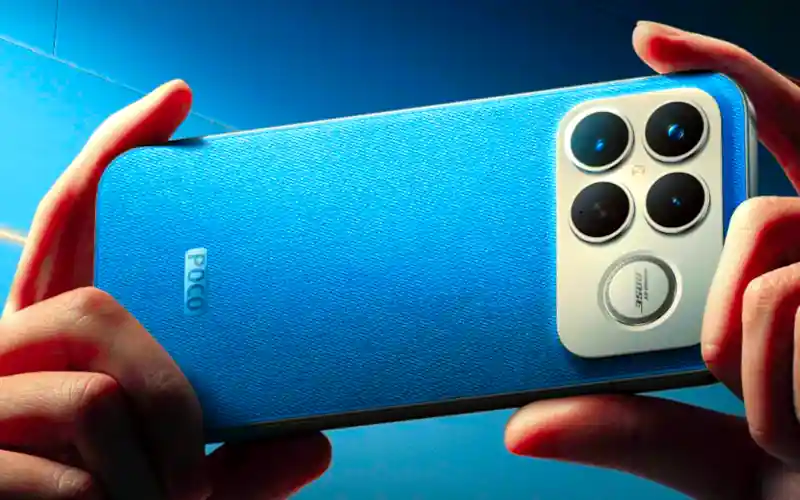
POCO has introduced the F8 Ultra and F8 Pro smartphones, marking its entry into the premium segment. The launch took place in Bali, where the company also unveiled the Pad M1 tablet as part of its expanding AIoT portfolio. According to POCO, the new devices are designed to deliver advanced experiences for users with diverse needs. A partnership with audio specialist Bose was also announced, bringing Sound by Bose technology to the F8 series.
The collaboration focuses on enhancing sound quality and multimedia use. Engineers from Bose worked closely with POCO to align hardware and acoustic solutions. Company representatives emphasized that after seven years of development, POCO has become a notable player in the smartphone market. The brand aims to make high-end features accessible while maintaining competitive pricing.
Hardware Advances in Display and Performance
The F8 Ultra serves as the flagship model, built on a dual-chipset architecture. It combines the Snapdragon 8 Elite processor with the VisionBoost D8 companion chip, achieving an AnTuTu score of around 3.9 million. Gaming performance is supported by features such as adaptive refresh rates and AI Super Resolution. Stability is reinforced by the 3D IceLoop cooling system, which distributes heat across multiple layers.
Software optimization is handled by WildBoost, balancing CPU and GPU workloads to reduce energy use. POCO reported that even during extended sessions at 120 frames per second, performance remained consistent. The HyperRGB display technology introduces a full RGB subpixel structure, lowering energy consumption by nearly 20 percent compared to earlier models. An M10 luminescent material further improves brightness stability during prolonged use.
Audio performance is shaped by the Bose collaboration and a three-speaker design. Users can select between two sound profiles, one emphasizing deeper tones and another offering balanced playback. Bose specialists contributed acoustic tuning to refine the final output. Together, these elements highlight POCO’s focus on multimedia experiences in its premium devices.
Imaging, Battery, and Connectivity Features
The F8 Ultra’s camera system is built around a 50-megapixel Light Fusion 950 sensor with optical stabilization. A large sensor size improves light capture, enabling detailed images in low-light conditions. Lens coatings reduce reflections and glare, while a periscope telephoto lens offers five-times optical zoom and up to twenty-times ultrazoom. Software features such as Motion Capture and Super Moon Mode add further versatility.
Battery capacity reaches 6,500 mAh, with 100-watt fast charging that can fully recharge the device in 38 minutes. Wireless charging at 50 watts provides an alternative for cable-free use. Intelligent charging modes help regulate temperature and extend battery lifespan. The HyperOS 3 system supports multitasking, device collaboration, and AI-driven tools for text and media processing.
Connectivity options include eSIM support and Xiaomi’s Astral Communication system, which enables basic emergency communication without a network. The F8 Pro shares many of the Ultra’s features but comes with a more modest configuration. It retains the same display and Bose audio technology, while introducing a multi-phase etched glass back for design emphasis. Its camera system includes a telephoto lens with 2.5x and 5x optical zoom.
Tablet Launch and Global Presence
The Pad M1 tablet was also introduced, targeting users who prefer larger screens. It features a 12-inch display with 2.5K resolution and a 120 Hz refresh rate. Dolby Atmos audio and four speakers enhance multimedia use, while a 12,000 mAh battery supports extended operation. Powered by the Snapdragon 7s Gen 4 processor and HyperOS, the tablet is designed for smooth multitasking.
Since its founding in 2018, POCO has expanded to more than 90 countries and shipped 93 million devices. The brand ranked 35th on the 2025 Kantar BrandZ list of Chinese global brand builders. Company representatives stated that the goal remains to make advanced technology available to a wide audience. The F8 series and Pad M1 reflect this ambition in both hardware and software design.
Industry analysts highlight the Snapdragon 8 Elite chipset as a major development for 2025. Reports suggest it may be the first mobile processor generation to consistently outperform entry-level laptops in certain tasks. Enhanced AI capabilities, gaming performance, and multitasking efficiency are expected to define its role in upcoming devices. This trend underscores how smartphone hardware is increasingly closing the gap with traditional computing platforms.