
Protecting Astronauts From Cosmic Rays
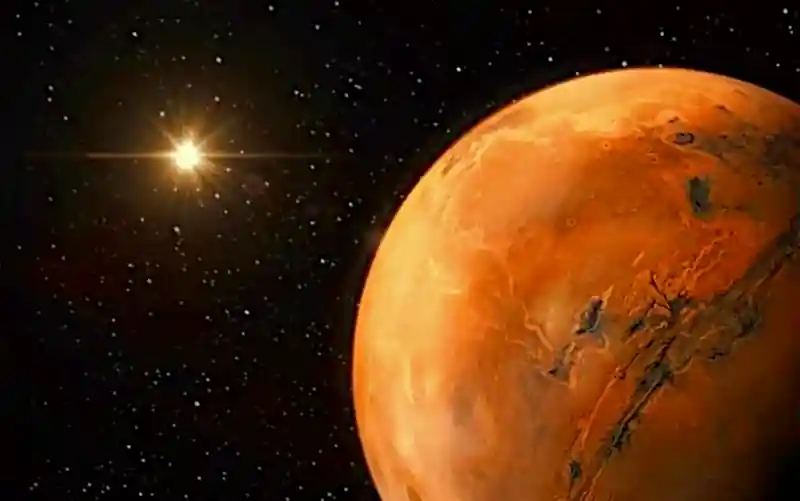
- As NASA prepares for new lunar missions and future crewed journeys to Mars, scientists warn that cosmic radiation remains one of the biggest obstacles to deep‑space travel.
- Current shielding methods offer limited protection against high‑energy particles that can damage both spacecraft and human biology.
- Researchers are now exploring advanced testing methods and biological strategies to reduce these risks.
Cosmic Rays Pose a Major Challenge for Deep‑Space Missions
Humanity’s return to the Moon is approaching, with Artemis II set to send astronauts around the lunar surface next year and Artemis III planning a week‑long landing soon after. These missions are stepping stones toward a crewed trip to Mars in the 2030s. However, cosmic rays—high‑energy particles originating from the Sun and distant stars—remain a significant threat. They are invisible to the naked eye yet powerful enough to disrupt molecular structures in both living organisms and spacecraft materials.
Earth’s magnetic field and atmosphere shield us from most of this radiation. Once astronauts leave this protective bubble, they face continuous exposure to particles capable of breaking DNA strands and damaging proteins. Such effects increase the risk of long‑term health issues, including cancer. Understanding how these particles interact with biological systems is therefore essential for planning safe missions.
Researchers aim to measure the biological impact of cosmic rays and develop strategies to mitigate their effects. Sending tissues, organoids or animals into space provides valuable data but is costly and logistically complex. Particle accelerators on Earth offer a more practical alternative by simulating components of cosmic radiation. Facilities in the United States and Germany already expose biological samples to sequential radiation types, and a new accelerator in Germany will soon reach even higher energies.
These simulations, however, do not fully replicate real space conditions. Many experiments deliver radiation doses in a single burst, which differs from the continuous, mixed‑particle exposure found in deep space. Scientists have proposed building a multi‑branch accelerator capable of firing several particle beams simultaneously to better mimic cosmic radiation. Such a facility remains conceptual but could significantly improve testing accuracy.
Limits of Physical Shielding and the Search for New Solutions
Physical shielding is the most intuitive form of protection. Materials rich in hydrogen, such as polyethylene or water‑absorbing hydrogels, can slow charged particles and are already used in spacecraft design. Their effectiveness is limited, especially against galactic cosmic rays that carry extremely high energy. These particles can penetrate shielding and even generate secondary radiation that increases exposure.
Because of these limitations, researchers are turning to biological strategies. Antioxidants are one promising avenue, as they can protect DNA from harmful byproducts created when cosmic rays strike cells. Experiments using the synthetic antioxidant CDDO‑EA showed that treated mice avoided cognitive impairments typically caused by simulated cosmic radiation. The findings suggest that targeted supplementation could help protect astronauts during long missions.
Scientists are also studying organisms with natural resistance to radiation. Hibernating animals exhibit increased resilience during their dormant state, though the underlying mechanisms remain unclear. Inducing hibernation‑like conditions in non‑hibernating species has shown potential for increasing radioresistance. Tardigrades, known for their extreme durability, offer additional clues through their ability to protect cellular components when dehydrated.
These biological insights may help preserve essential organisms during long‑duration missions. Microbes, seeds and even small animals could be stored in protected states and revived when conditions improve. Understanding how these mechanisms work could be crucial for sustaining life on future spacecraft. Researchers believe that combining biological and physical strategies will be necessary for effective protection.
Supporting Natural Stress Responses and Future Research Needs
A third approach focuses on enhancing organisms’ natural stress responses. Environmental pressures such as heat or starvation have driven species to evolve cellular defenses that protect DNA and other structures. Early research suggests that activating these pathways through specific diets or drugs may offer additional protection in space. These ideas remain preliminary but highlight the potential of leveraging evolutionary biology for radiation defense.
Physical shielding alone is unlikely to provide sufficient protection for deep‑space missions. Combining biological strategies with improved testing methods and new accelerator facilities could bring meaningful progress. Scientists estimate that fully solving cosmic‑ray protection may still take decades. Increased investment in space radiation research could accelerate the timeline.
The long‑term goal is to enable astronauts to travel beyond Earth’s magnetic shield without facing constant exposure to harmful particles. Achieving this will require advances in materials science, biology and radiation physics. Each new mission provides opportunities to refine protective strategies. The path to Mars depends on solving these challenges.
Tardigrades’ remarkable radiation resistance is partly linked to a unique protein called Dsup (“damage suppressor”), which binds to DNA and reduces radiation‑induced breaks. Experiments have shown that inserting the Dsup gene into human cells can significantly increase their resistance to X‑ray damage. While this research is still in early stages, it demonstrates how studying extreme organisms may inspire future biomedical protections for space travel.