
Revealing the World’s Oldest Star Map
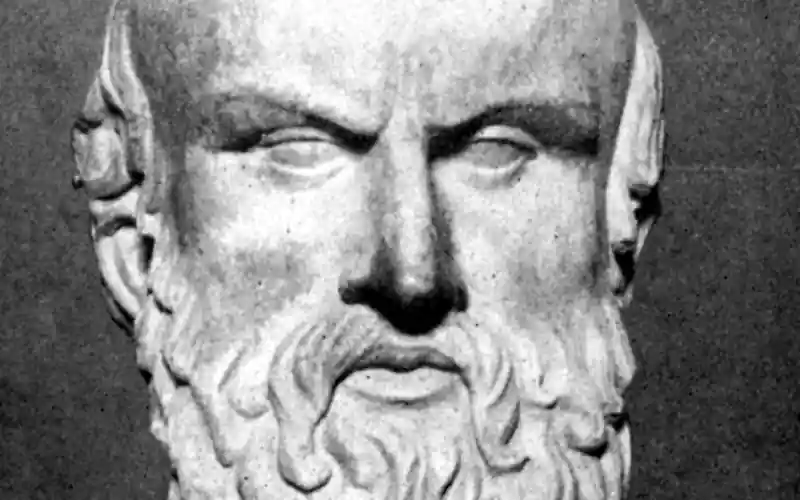
Hipparchus
- Researchers are reconstructing what may be the oldest surviving map of the night sky.
- The hidden star catalog, attributed to Hipparchus, is being uncovered using advanced X‑ray scanning.
- Scientists hope the restored text will shed new light on the origins of scientific astronomy.
A Lost Astronomical Work Reemerges
Researchers are working to reconstruct what appears to be the oldest known map of the night sky, long believed to be lost. The discovery centers on a manuscript containing a hidden star catalog attributed to Hipparchus, the ancient Greek astronomer who lived between 190 and 120 BCE. He is widely regarded as the first Western astronomer to attempt a systematic catalog of the stars and to calculate the motions of the Sun and Moon. Until recently, only fragments of his work survived, leaving much of his contribution to early astronomy uncertain.
The breakthrough began in 2022, when scholars analyzing a 6th‑century monastery manuscript noticed faint traces of astronomical text beneath later writing. Medieval scribes often reused parchment by scraping off older ink, a practice that inadvertently preserved layers of overwritten material. Earlier examinations had detected hints of astronomical content, but researchers were able to link specific references to Earth’s axial precession to the period when Hipparchus was active. This connection suggested that the manuscript might contain a far more complete version of his star catalog.
The manuscript, known as the Codex Climaci Rescriptus, is now undergoing detailed X‑ray scanning at the SLAC National Accelerator Laboratory. Scientists hope to reveal the underlying Greek text without damaging the fragile parchment. Their goal is to recover as many stellar coordinates as possible, potentially offering unprecedented insight into ancient observational techniques. Early results have already revealed several star descriptions, including a reference to the constellation Aquarius.
The project has generated excitement among historians of science. Victor Gysembergh of the French CNRS described the effort as a chance to answer fundamental questions about the origins of scientific inquiry. He noted that the coordinates uncovered so far are remarkably precise for observations made without telescopes. Such accuracy could reshape modern understanding of how quickly ancient astronomers developed sophisticated measurement methods.
How X‑Ray Scanning Reveals Hidden Text
The restoration relies on a particle accelerator known as a synchrotron, which produces high‑energy X‑rays by accelerating electrons to near‑light speeds. These X‑rays can distinguish between different chemical signatures in the parchment, allowing researchers to separate layers of ink. The monks who overwrote the manuscript used iron‑rich ink, while the underlying Greek text contains more calcium. This chemical contrast enables scientists to isolate the older writing and reconstruct the hidden star catalog.
The scanning process is delicate and requires strict environmental controls. Manuscript pages are placed in custom frames and stored in humidity‑regulated cases to prevent deterioration. Light levels in the scanning room are kept low to avoid further fading of the ink. Transporting the manuscript from the Museum of the Bible in Washington, DC, to the SLAC facility required careful planning to ensure its preservation.
Only 11 pages of the manuscript are currently being scanned, even though the Codex Climaci Rescriptus contains around 200 pages in total. Many of these pages are dispersed across institutions worldwide, complicating efforts to reconstruct the full star map. Coordinating access to the remaining folios may be necessary to complete the restoration. Despite these challenges, researchers remain optimistic about uncovering additional astronomical data.
Progress so far has been steady. Each new scan reveals more lines of ancient Greek text, gradually expanding the known portion of Hipparchus’s work. The recovered material may eventually allow scholars to compare his measurements with later catalogs, including those of Ptolemy. Such comparisons could clarify longstanding debates about the accuracy and influence of early Greek astronomy.
Why Hipparchus’s Star Map Matters
Hipparchus is often credited as the founder of trigonometry and one of the most influential astronomers of antiquity. His lost star catalog has been a subject of speculation for centuries, as later astronomers relied heavily on his methods. Reconstructing the catalog could provide direct evidence of how he measured stellar positions and tracked celestial motion. It may also reveal how ancient observers understood long‑term astronomical phenomena such as precession.
The rediscovered text offers a rare opportunity to study scientific practice from more than two millennia ago. Ancient astronomers lacked telescopes, yet they achieved levels of precision that continue to impress modern researchers. Understanding how they accomplished this could reshape historical narratives about the development of scientific reasoning. It may also illuminate the transmission of astronomical knowledge across cultures and centuries.
The manuscript’s origins add another layer of historical significance. It is believed to have come from St Catherine’s Monastery in Egypt, the world’s oldest continuously inhabited Christian monastery. The site has preserved numerous ancient texts, many of which survived only because they were reused by later scribes. The Codex Climaci Rescriptus is one such example, offering a window into both early Christian scholarship and ancient Greek science.
Researchers hope that continued scanning will reveal additional constellations, coordinates and descriptive notes. Each recovered fragment contributes to a more complete picture of Hipparchus’s work. The project demonstrates how modern technology can uncover knowledge thought to be permanently lost. It also highlights the value of interdisciplinary collaboration between historians, physicists and conservation experts.
A fascinating detail is that Hipparchus’s catalog may have influenced the later star map in Ptolemy’s Almagest, one of the most important astronomical works of antiquity. Scholars have long debated whether Ptolemy copied Hipparchus’s data or conducted his own observations. The newly recovered coordinates could finally provide evidence to resolve this centuries‑old question.