

Samsung Wallet Adds Digital Key Support for Toyota
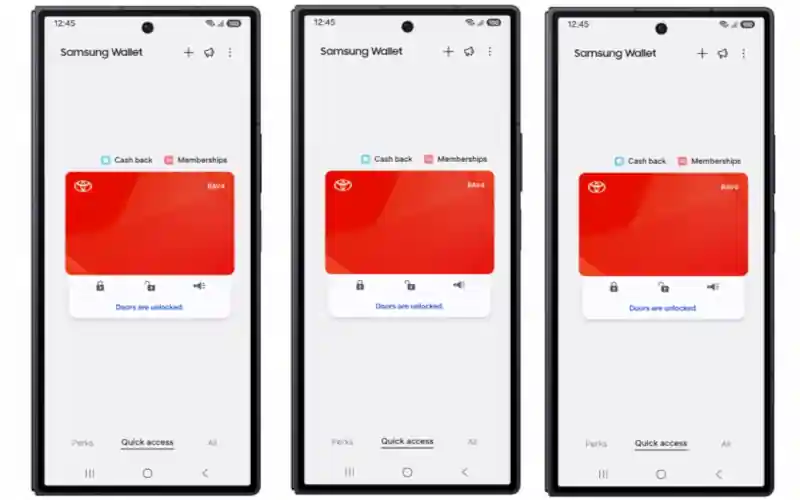
- Samsung Wallet will soon support Digital Key access for select Toyota vehicles, beginning with the 2026 Toyota RAV4.
- The feature allows Galaxy smartphone users to unlock, lock and start their cars using UWB and NFC technologies.
- Enhanced security, remote key management and cross‑device integration position the update as a practical step toward more connected driving experiences.
A New Integration for Connected Mobility
Samsung Electronics announced that Samsung Wallet will introduce Digital Key compatibility for select Toyota vehicles starting in January 2026. The rollout begins with the 2026 Toyota RAV4, giving Galaxy smartphone users the ability to control vehicle access without a physical key. The feature is designed to streamline everyday use by combining convenience with strengthened security measures. Samsung positions the update as part of its broader effort to unify essential digital tools within a single platform.
Samsung Wallet already consolidates payment cards, IDs, passes and other digital keys into one secure interface. Its integration across the Galaxy ecosystem enables consistent functionality across devices. Adding vehicle access expands the platform’s role in daily routines, particularly for users who rely on their phones for authentication and mobility. The company emphasizes that the goal is to reduce friction while maintaining strict security standards.
How the Digital Key System Works
Once a compatible Toyota vehicle is paired with Samsung Wallet, users can unlock, lock and start the car using their Galaxy smartphone. Ultra‑Wideband (UWB) technology enables hands‑free entry by detecting proximity with high precision, while Near Field Communication (NFC) provides an additional method for secure access. UWB follows standards set by the Car Connectivity Consortium, helping reduce the risk of unauthorized entry. Digital Keys can also be shared with trusted contacts, with permissions adjustable or revocable at any time.
Security is handled through Samsung Knox, the company’s hardware‑based protection platform. Digital Keys stored on the device meet EAL6+ certification requirements, one of the highest levels of security evaluation for consumer hardware. If a phone containing a Digital Key is lost or stolen, users can remotely lock or delete the key through Samsung Find. Biometric or PIN authentication adds another layer of protection to ensure that only authorized individuals can interact with the vehicle.
Rollout Timeline and Regional Availability
Digital Key support for Toyota will begin rolling out this month in the United States, Canada and Mexico. A broader European launch will follow, aligned with Toyota’s regional release schedule for the 2026 RAV4. Samsung notes that availability may vary depending on market conditions and vehicle configurations. Additional Toyota models may be added in the future, though no further details have been announced.
The collaboration reflects a growing trend toward integrating mobile ecosystems with automotive platforms. Manufacturers are increasingly adopting standardized communication protocols to ensure compatibility across devices and brands. Samsung’s approach focuses on offering flexibility for multi‑driver households and simplifying access management through a familiar interface. The company expects the feature to become a routine part of how Galaxy users interact with their vehicles.
Digital car keys are becoming more common across the industry, with several automakers adopting UWB‑based systems due to their resistance to relay attacks. The Car Connectivity Consortium, which includes major smartphone and automotive brands, is working toward unified standards that allow cross‑platform compatibility. As these technologies mature, analysts expect digital keys to replace physical fobs in many mainstream vehicles over the next decade.