
Scientists Capture Earliest Moments of Supernova Blast
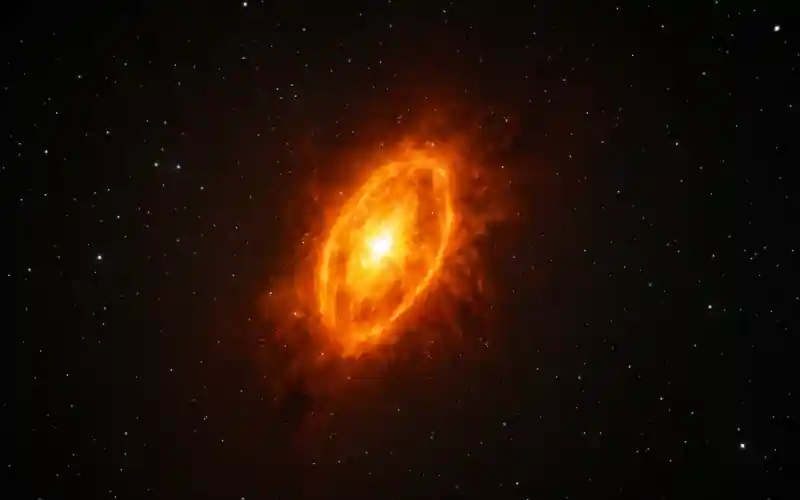
- New observations reveal unexpected olive-shaped explosion
Astronomers have, for the first time, directly observed the earliest stage of a supernova, offering new insight into one of the universe’s most violent phenomena. Using the Very Large Telescope (VLT) in Chile, researchers tracked the explosion of a massive star in the NGC 3621 galaxy, located 22 million light-years away in the Hydra constellation. The star, estimated to be 15 times the mass of our sun, erupted in a shape resembling a vertically oriented olive. This unusual geometry challenges long-held assumptions about how supernovae unfold.
Rapid Response Enables Rare Observation
The explosion was detected on April 10, 2024, just as astrophysicist Yi Yang of Tsinghua University landed in San Francisco. Within hours, Yang submitted a request to aim the VLT at the event, which was quickly approved. Observations began just 26 hours after the initial detection and 29 hours after the star’s internal material breached its surface. Such timing allowed scientists to capture the brief phase before the explosion interacted with surrounding gas and dust.
Instead of a spherical blast, the explosion pushed outward in two opposing directions. A preexisting disk of gas and dust around the star’s equator distorted the blast, resulting in the olive-like shape. This configuration provided a rare opportunity to study the geometry of the explosion in detail. Yang emphasized that the shape offers clues about the physical processes driving the blast.
Stellar Death and Aftermath
The star was a red supergiant, a type known for its short lifespan relative to smaller stars like our sun. At the time of its death, it was approximately 25 million years old and had a diameter 600 times greater than the sun. Part of its mass was expelled into space, while the remaining core likely collapsed into a neutron star. These dense remnants are among the most compact objects in the universe.
Supernovae occur when a star exhausts its hydrogen fuel, causing its core to collapse and trigger a powerful outward shock. The VLT captured the moment this shock broke through the star’s surface, releasing vast amounts of energy. During this brief phase, the explosion becomes visible and its initial shape can be studied. Yang noted that the observations may rule out some existing models of how massive stars explode.
Implications for Stellar Physics
Understanding the geometry of supernovae is critical for refining theories of stellar evolution. The olive-shaped blast suggests that surrounding material plays a significant role in shaping the explosion. Yang and his team believe these findings will help scientists better predict the outcomes of massive star deaths. Further research may reveal whether such shapes are common or unique to specific conditions.
The NGC 3621 galaxy, where the supernova occurred, is a spiral galaxy without a central bulge, making it an ideal target for observing stellar events. Its relatively close proximity to Earth—by cosmic standards—allowed for high-resolution imaging of the explosion’s early phase.