
US Plans Portal to Bypass Content Blocks
- The U.S. State Department is developing an online portal intended to let users abroad view content restricted by their governments.
- The initiative, centered on a site called freedom.gov, aims to counter what Washington sees as excessive censorship in Europe and other regions.
- Its launch has already raised legal and diplomatic questions, particularly regarding its impact on relations with U.S. allies.
A New Tool to Circumvent Online Restrictions
The U.S. State Department is preparing an online platform designed to allow people in Europe and elsewhere to access content banned under local laws. The site, expected to operate under the domain freedom.gov, would display material classified as hate speech, terrorist propaganda or other restricted categories in certain countries. Officials have discussed including a virtual private network feature to route user traffic through the United States, and sources say the site will not track user activity. The project is led by Undersecretary for Public Diplomacy Sarah Rogers and was initially expected to be unveiled at the Munich Security Conference.
Reuters could not determine why the announcement was delayed. Some State Department officials, including legal staff, have reportedly raised concerns about the initiative, though details remain unclear. A spokesperson said the U.S. does not operate a Europe‑specific censorship‑circumvention program but emphasized that digital freedom remains a priority. The spokesperson also denied that any announcement had been postponed or that internal objections had been raised.
Potential Diplomatic Tensions with Europe
The portal could strain relations between Washington and European governments, which already differ sharply from the U.S. on free‑speech standards. European Union rules require platforms to restrict or rapidly remove content deemed illegal, including hate speech, extremist propaganda and harmful disinformation. These policies stem from historical efforts to prevent the resurgence of ideologies linked to Nazism and other forms of extremism. U.S. officials have criticized such regulations, arguing they suppress political voices, particularly on the right.
The Trump administration has made online free speech a foreign‑policy priority, including in Europe and Brazil. Critics say the new portal could place the U.S. in the unusual position of encouraging citizens abroad to circumvent their own laws. EU regulators regularly issue takedown orders to major platforms, and noncompliance can result in significant fines. X, owned by Elon Musk, was fined 120 million euros in December for failing to meet EU requirements.
Political Context and Implementation Questions
Rogers has become a prominent advocate for the administration’s stance on European content policies. She has visited several European countries since taking office and met with groups that say they face political suppression under current regulations. The State Department did not make her available for comment. Former officials warn that freedom.gov may be viewed in Europe as an attempt to undermine national laws.
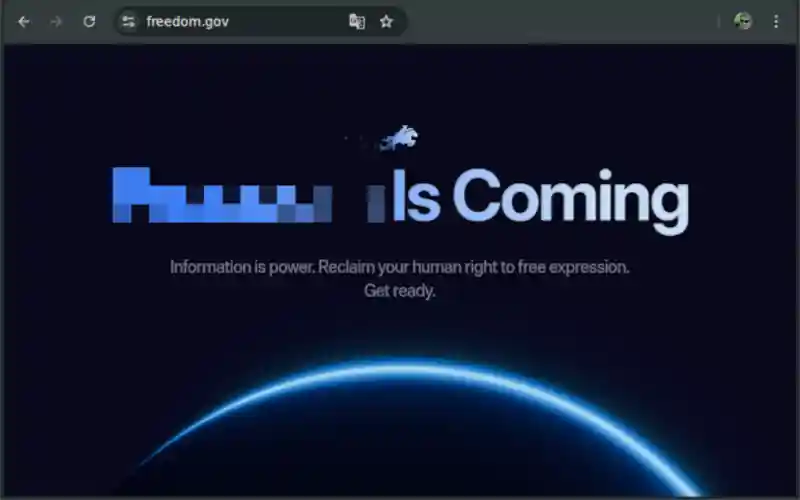
The project also involves Edward Coristine, a former member of Musk’s Department of Government Efficiency, who now works with the National Design Studio. The freedom.gov domain was registered on January 12 and currently displays only a logo, a slogan and a login form. It remains unclear what advantages the portal would offer compared to commercial VPN services already widely available. Before Trump’s second term, the U.S. government funded circumvention tools to support access to information in countries such as China, Iran and Russia.
Europe’s regulatory framework for online content has expanded significantly since 2008, with the Digital Services Act becoming one of the most influential global models for platform governance. The U.S. approach, rooted in First Amendment protections, often clashes with these rules, creating recurring friction between regulators on both sides of the Atlantic. Analysts note that freedom.gov could become a symbolic flashpoint in broader debates over sovereignty, digital rights and the responsibilities of global platforms. The initiative also highlights how geopolitical tensions increasingly intersect with internet governance and content moderation.