

Venus Lava Tube Discovery Reveals Hidden Planetary Geology
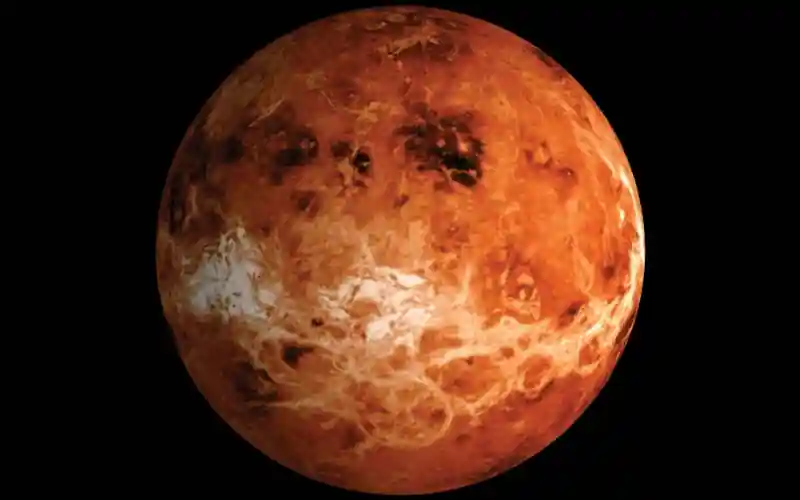
- Scientists have identified what appears to be a massive underground lava tube on Venus using decades‑old radar data from NASA’s Magellan spacecraft.
- The finding marks the first direct detection of a subsurface feature on the planet.
- Researchers say the discovery opens new avenues for understanding Venusian geology and preparing for upcoming missions.
A Landmark Detection Beneath Venus’ Surface
A new analysis of radar data collected by NASA’s Magellan spacecraft in the early 1990s has revealed evidence of a large underground cavity on Venus. Researchers interpret the feature as part of a lava tube, a type of volcanic structure known from Earth, the Moon and likely Mars. Venus’ thick, toxic atmosphere normally obscures its surface, but radar instruments can penetrate the cloud cover to reveal geological details. The study marks the first time a subsurface feature has been directly detected on Earth’s nearest planetary neighbor.
Scientists had long suspected that lava tubes might exist on Venus due to its extensive volcanic history. The new findings move this idea from theory to observation. Lorenzo Bruzzone, a radar and planetary scientist at the University of Trento, described the discovery as a major step forward for Venus research. He noted that the results provide valuable information for future missions aiming to explore the planet’s geology.
The team examined Magellan’s Synthetic Aperture Radar data from 1990 to 1992, focusing on regions showing surface collapses that could indicate underground voids. A recently developed analysis method helped identify radar reflections consistent with a large cavity. The structure lies on the western flank of Nyx Mons, a broad shield volcano in Venus’ northern hemisphere. The area contains numerous pits formed by surface collapse, supporting the interpretation of a lava tube below.
Understanding the Scale and Significance
The detected structure appears to be part of an empty lava tube with an estimated diameter of about one kilometer. Its roof is at least 150 meters thick, and the cavity itself reaches a height of roughly 375 meters. Only the initial portion of the tube could be observed due to limitations in the Magellan data, but researchers believe it may extend for several miles. Its size exceeds that of lava tubes found on Earth and those predicted for Mars, placing it at the upper end of the range observed on the Moon.
Venus’ surface is known to host lava channels that are larger and longer than those on other planets, making the discovery consistent with previous observations. Leonardo Carrer, lead author of the study, emphasized that this is the first opportunity to directly observe processes occurring beneath Venus’ surface. The planet’s diameter is slightly smaller than Earth’s, and Magellan mapped 98% of its surface, providing the foundation for decades of geological research. Venus hosts more volcanoes than any other planet in the solar system, with widespread evidence of past lava flows.
Lava tubes form when low‑viscosity lava continues to flow beneath a solidifying surface layer. These natural tunnels can remain intact long after volcanic activity ceases. The Magellan radar’s side‑looking geometry allowed it to detect reflections from underground cavities, enabling the identification of the Venusian tube. The structure’s dimensions suggest that Venus’ volcanic processes may produce larger subsurface features than those found elsewhere in the solar system.
Bruzzone noted that while the lava tube itself is not evidence of current volcanic activity, recent studies indicate that some Venusian volcanoes may still be active. Future missions are expected to clarify the extent of ongoing volcanism. Understanding subsurface structures will be crucial for interpreting the planet’s geological evolution and internal dynamics.
Implications for Future Venus Exploration
The discovery arrives at a time of renewed scientific interest in Venus. Two major missions are planned for the coming years: the European Space Agency’s Envision and NASA’s VERITAS. Both spacecraft will carry advanced radar systems capable of capturing higher‑resolution images than Magellan. Envision, in particular, will include a ground‑penetrating radar designed to probe several hundred meters below the surface.
These missions aim to investigate Venus’ geology, atmospheric processes and potential signs of ongoing volcanic activity. The identification of a lava tube provides a new target for future observations. Carrer described the coming decade as a pivotal period for Venus research, with improved instruments expected to reveal details that were previously inaccessible. The ability to detect subsurface structures will help scientists better understand how Venus’ interior interacts with its surface and atmosphere.
The discovery also highlights the value of re‑examining older datasets with modern analytical techniques. Magellan’s radar data, collected more than 30 years ago, continues to yield new insights as researchers develop more sophisticated tools. This approach may uncover additional subsurface features that were previously overlooked. The findings underscore the importance of long‑term data preservation in planetary science.
As interest in Venus grows, the planet is likely to become a major focus of exploration efforts. Understanding its volcanic history and internal structure could shed light on why Venus and Earth, despite their similarities, evolved so differently. The newly identified lava tube adds an important piece to this puzzle and sets the stage for deeper investigation.
Lava tubes on the Moon and Mars have been proposed as potential shelters for future astronauts due to their stable temperatures and protection from radiation. While Venus’ extreme surface conditions make human exploration unlikely, studying its lava tubes may help scientists understand how such structures form across different planetary environments.