
ZOWIE brings pro-grade tech to Budapest Major
- ZOWIE plans to expand its presence at the StarLadder Budapest Major 2025 by supplying its XL2586X+ monitors and engaging global audiences through community initiatives.
- The company highlights its long-term focus on practical, performance-driven esports technology.
- Its research-based approach and collaborations with pro players continue to shape display and peripheral design.
ZOWIE at Budapest Major 2025
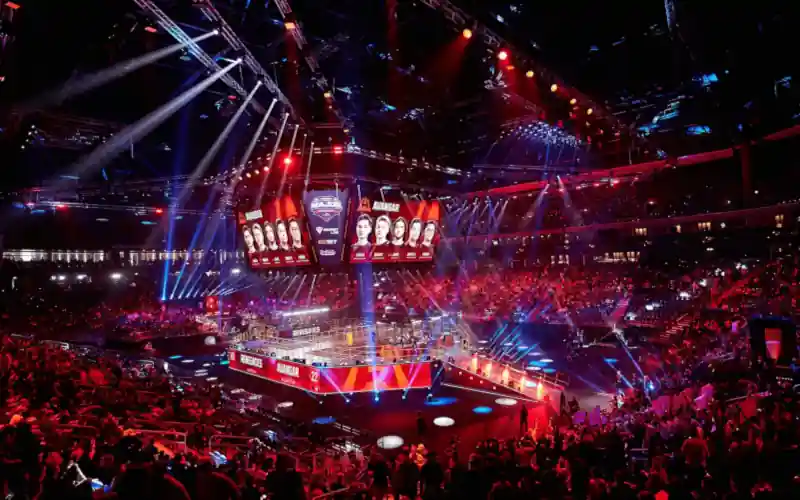
ZOWIE will play a central role at the StarLadder Budapest Major 2025 as it provides the XL2586X+ monitor for all tournament matches. The brand views professional events as an opportunity to refine competitive standards and reinforce its long-term involvement in esports. It also invites global viewers to participate through the ZOWIE Fan Power Challenge, which allows fans to support their favorite teams in real time. Community engagement remains a key part of ZOWIE’s strategy, as the company aims to connect tournament-level experiences with the wider esports audience.
The esports industry continues to expand rapidly, exceeding two point one three billion dollars in estimated market size for 2024 and projected to grow to seven point four six billion dollars by 2030. Such momentum drives hardware makers to adapt their technology to the increasingly demanding competitive environment. ZOWIE emphasizes steady investment in equipment designed specifically for tournament-level play rather than general-purpose consumer gear. Company leadership states that this approach aligns with long-term partnerships across teams and organizers, which help define performance expectations for professional events.
ZOWIE describes its involvement as a continuation of more than a decade of collaboration with esports teams and industry partners. Those relationships influence how its monitors and peripherals evolve, particularly in areas affecting motion clarity, ergonomics, and input consistency. Tournament organizers value predictable and reliable equipment performance, which in turn helps ZOWIE validate its design decisions. The Budapest Major serves as another testing ground where the company can observe how its hardware performs under real competitive pressure.
These insights support ZOWIE’s broader goal of refining competitive experiences across multiple titles, formats, and regions. The company continues to position itself as a technology provider that aims to improve player performance through practical engineering choices. While esports growth forecasts remain ambitious, brands with strong ties to tournament infrastructure may play an increasingly important role in shaping standards. ZOWIE aims to maintain this role through research, field testing, and collaboration with professional teams.
XL2586X+ and Competitive Display Requirements
The XL2586X+ will serve as the official display of the Budapest Major, reinforcing its visibility among Counter-Strike 2 professionals. Industry statistics indicate that a large majority of CS2 players already favor ZOWIE monitors, a trend the company attributes to motion processing and panel tuning. The XL2586X+ features a six-hundred-hertz Fast-TN panel paired with DyAc 2 technology, which focuses on reducing motion blur during rapid movements. This type of clarity can help players track opponents more easily during fast engagements.
The monitor’s physical design also contributes to its suitability for competitive environments. Its bearing-based stand enables quick and precise height adjustments, which many players prefer during warm-up or on stage. The tuning of the display modes emphasizes response consistency rather than image enhancement features often found on consumer displays. ZOWIE frames these decisions as part of a broader philosophy centered on function and predictability over visual styling.
Tournament organizers often prioritize equipment that remains stable across multiple matches and setups. The XL2586X+ attempts to address this by providing uniform performance with minimal calibration needs. Players can adjust to the display quickly, which reduces downtime and helps maintain match schedules. Consistency is especially important for events where hundreds of competitive rounds take place under tight time constraints.
As esports events scale in size and visibility, the hardware used on stage must balance durability and competitive precision. ZOWIE uses these tournaments to gather operational data on how displays hold up during travel, staging, and continuous use. The company plans to continue refining its technology based on these findings. The Budapest Major represents another opportunity to validate performance claims in a real, high-pressure environment.
Research-Driven Product Development
ZOWIE bases much of its peripheral design on data gathered from its Sports Science Labs, where researchers study player movements and physical responses. Teams use motion capture and electromyography to analyze how players handle mice during extended sessions. This research helps identify factors such as muscle fatigue, grip stability, and hand positioning that influence long-term performance. These insights directly guide the shape and structure of ZOWIE’s mouse lineup.
The DW wireless series reflects this research-driven approach, offering seven distinct shapes to accommodate different hand sizes and grip styles. Models like the EC-DW feature rounded curves designed to reduce unnecessary palm pressure. The goal is to maintain stability during long practice sessions or tournaments without restricting natural movement. Subtle variations in curvature, button angle, and weight distribution all contribute to how players experience control under stress.
Signal performance also plays an important role in competitive reliability. ZOWIE redesigned its wireless receiver to improve stability and reduce the chance of frame drops or interference during gameplay. These refinements can help players maintain accurate tracking during fast flicks or micro-adjustments. Wireless peripherals continue to gain acceptance in esports as latency and reliability improve across the industry.
ZOWIE extends the same research-based mindset to its monitors, where engineers adjust panel behavior to maintain clarity in fast motion. Collaboration with professional players remains central to this process, as hands-on testing reveals performance issues that lab conditions may not capture. The company incorporates these findings into iterative updates, aiming to produce equipment that behaves predictably in high-pressure match situations. The Budapest Major serves as both a showcase and a feedback loop for these design choices.
The Budapest Major 2025 represents the first Counter-Strike Major hosted in Hungary, marking a significant milestone for the Central European esports scene and expanding the list of countries that have staged Valve-supported championship events.